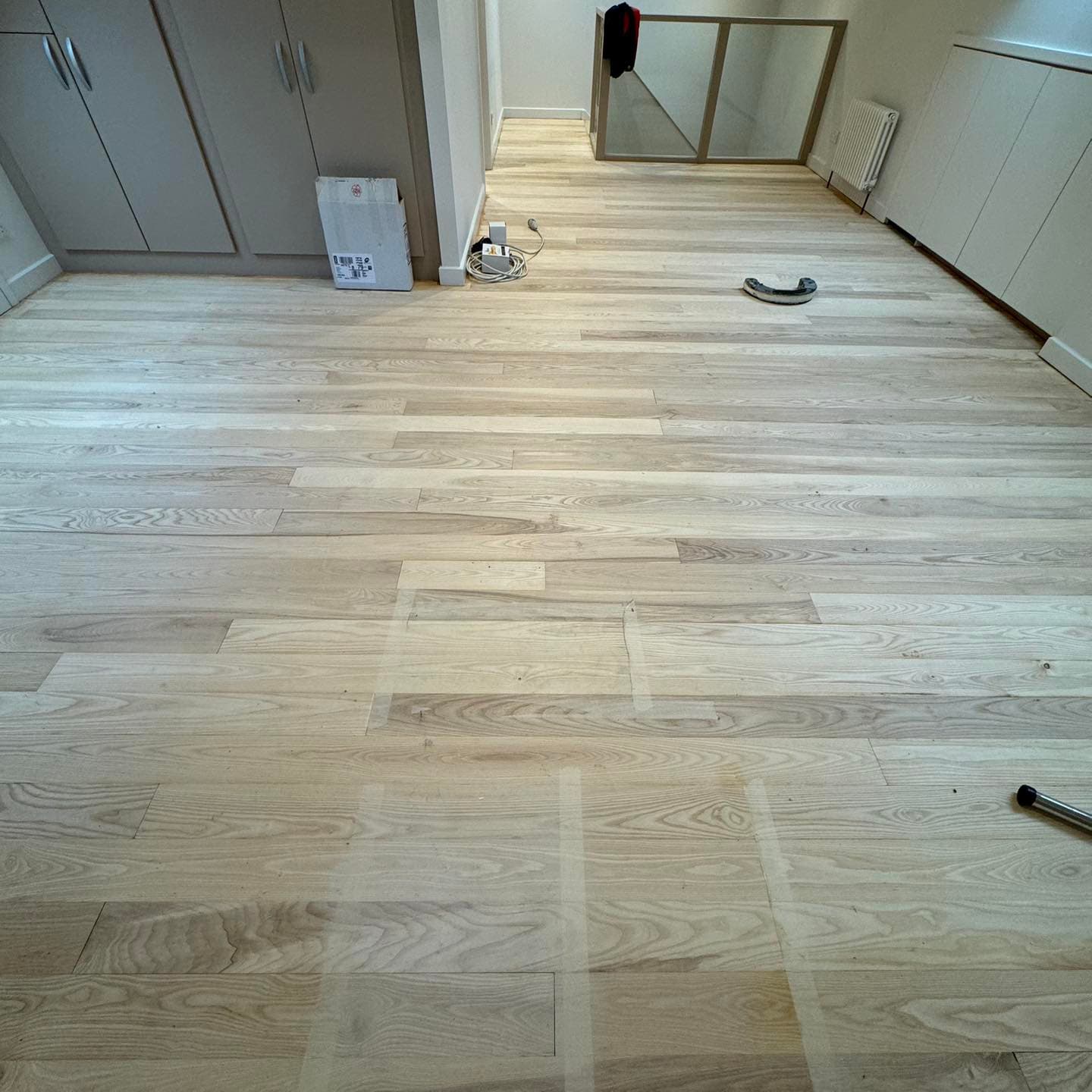
Pull the rug up in an old house and the gaps are usually the first thing you notice. A dark line between every board, some wide enough to lose a coin down, and a draught you can feel with the back of your hand.
They are not a sign the floor is failing. They are what old softwood boards do. The question is whether to fill them, what with, and what happens to the filler when the boards move again next winter.
Why do gaps open between floorboards?
Wood takes up moisture from the air and gives it back. When the air is damp it swells; when the air is dry it shrinks. It moves most across its width, which is exactly the direction that opens and closes the gap between two boards.
Seasonal movement. In most houses the boards are at their tightest in late summer and at their most open in winter. The gaps you see in January may be noticeably narrower by August.
Central heating. Radiators and underfloor heat dry the air out, and the boards dry with it. Gaps tend to be widest near radiators, along heating pipe runs, and in rooms that are kept warm all winter. Victorian floors were laid in houses heated by open fires; most of them now live in something much drier.
Age and shrinkage. Boards that have spent a century drying out have lost some of their width for good. Some gaps simply do not close any more.
Old repairs and lifted boards. Electricians and plumbers lift boards. They rarely go back in exactly the gap they came out of, and there is often a wider gap or a short packed-out board where a pipe was run in the 1970s.
Square-edged boards. Many period floors are square-edged rather than tongue-and-groove, so there is nothing between the boards at all, just the void underneath.
Option one: leave them
This is a perfectly good answer, and on a lot of floors it is the right one.
Gaps are part of the look of an original floor, and a sanded and finished floor with its gaps left open looks honest rather than unfinished. If the gaps are narrow, the draught is not a problem and nothing is falling through, there may be no reason to fill them. Leaving them also means nothing can crack, fall out or show a line of different colour in five years' time.
Option two: wooden slivers
For wide gaps, slivers are generally the best repair. Thin strips of timber are cut to the width of each gap, glued along one edge, tapped in and planed or sanded flush with the floor.
Done properly, they become part of the board. They take the finish like the surrounding wood, they do not crack out the way a rigid filler can, and because they are timber they move with the floor rather than fighting it. Where we can, we use reclaimed pine so the colour and grain match the original boards once the finish is on.
The catch is that it is slow, careful work, gap by gap, and the boards will still move a little either side of the new strip. A slivered floor is tighter and far less draughty, but no fill makes an old floor completely seamless all year round.
Option three: flexible or resin fillers
Flexible gap fillers are designed for joints that move. They stay slightly soft once cured, so they stretch a little when the gap opens and compress when it closes.
They suit gaps that are too wide for a sawdust filler but too narrow, or too irregular, for a sliver. They are quicker than slivers. On the other hand they do not take a finish quite like timber, and they come in set colours, so the line between the boards will be visible. Whether that matters depends on the floor and on you.
Option four: sawdust and resin
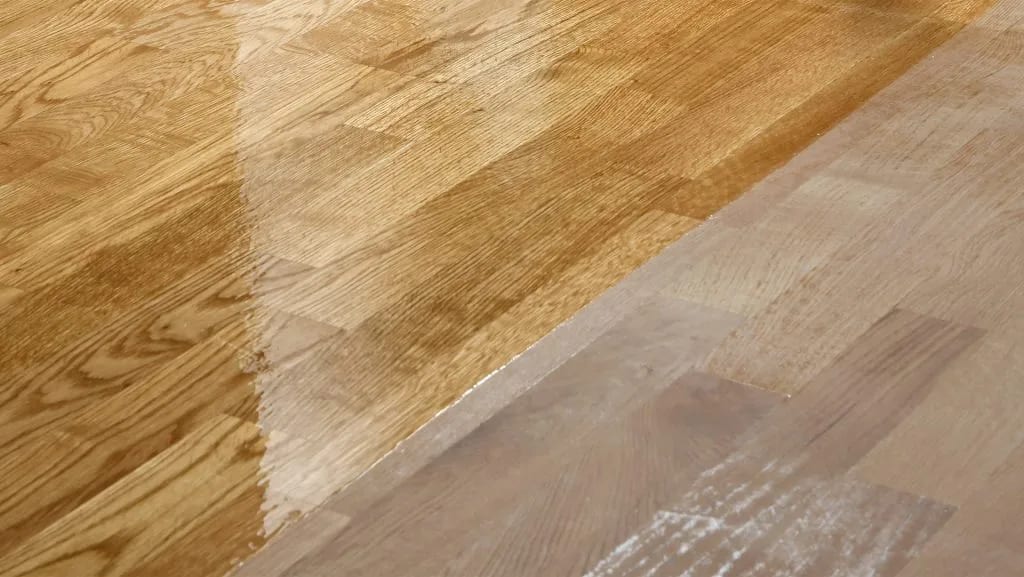
The traditional sander's filler: dust from the floor's own final sanding, mixed with a resin binder, trowelled across the whole floor into the gaps and sanded back once it is hard.
Its big advantage is colour. Because it is made from the same wood, it is a close match. On narrow gaps and small cracks in a tight floor it works well.
On wide gaps it is a different story. A sawdust-and-resin mix sets hard. Next winter the boards shrink, the gap opens, and the filler cannot stretch with it. It either cracks down the middle or lets go of one side and works loose. On a floor with big seasonal movement, you can end up with a floor full of cracked filler and loose slivers of it working their way out underfoot. This is the single most common gap-filling complaint we hear.
Gaps, draughts and under-floor insulation
On a suspended timber ground floor, the gaps between boards connect your room to the void underneath. That void is ventilated on purpose, through airbricks in the outside walls, to keep the joists and the underside of the boards dry. So the air moving through your floor in winter is outside air.
Historic England identifies gaps between floorboards as a significant source of heat loss in older buildings. Filling the gaps helps. Insulating between the joists, from below where there is access or by lifting boards, helps more.
Two things to know before anyone does it:
- The void still needs ventilating. Never block airbricks to stop a draught. A sub-floor that cannot breathe is how joists and boards start to rot.
- The materials matter in an old house. Conservation guidance warns against non-breathable boards or membranes between joists in older buildings, because they can trap moisture against the timber.
If boards are coming up to insulate, it is far better to do that before the floor is sanded and finished, not after.
What we do when we sand original boards
Every floor gets looked at on its own merits. On the free, no-obligation visit Rob surveys the boards, looks at the gaps and how much they are likely to move, and talks through what you want — draught-free, original-looking, or both.
On original pine, we offer both sliver filling and flexible resin, chosen according to the age of the boards and how much they move. We repair or replace damaged and loose boards with matching reclaimed pine where needed, and punch down any nails standing proud before the sanding starts. Our sanding is dust-free, which matters on a period floor full of gaps, because the dust is extracted at the machine rather than settling into the void and the room.
If you are thinking about filling the gaps yourself before having the floor sanded, talk to us first. A rigid filler that has to come back out is harder work than an empty gap. Original wood floor restoration: why DIY isn't worth it explains why.
Where to go next
- Pine floorboards — how original pine floors behave
- Why restoring natural wood floors beats replacing them
- Floor sanding across Yorkshire and wood sanding and finishing
- Heritage buildings, where the boards are part of the listing
- Local pages for Barnsley and Holmfirth
Ask us to look at your boards
Floor Angels is a family-run firm, part of Cleaning Angels Yorkshire, and has been restoring floors across South and West Yorkshire since 2007 — Sheffield, Barnsley, Huddersfield, Holmfirth and the villages between them.
Call 0114 288 1937 or 07729 345 458, or send us a message, and we will come out, look at the gaps and tell you honestly which approach suits your floor.