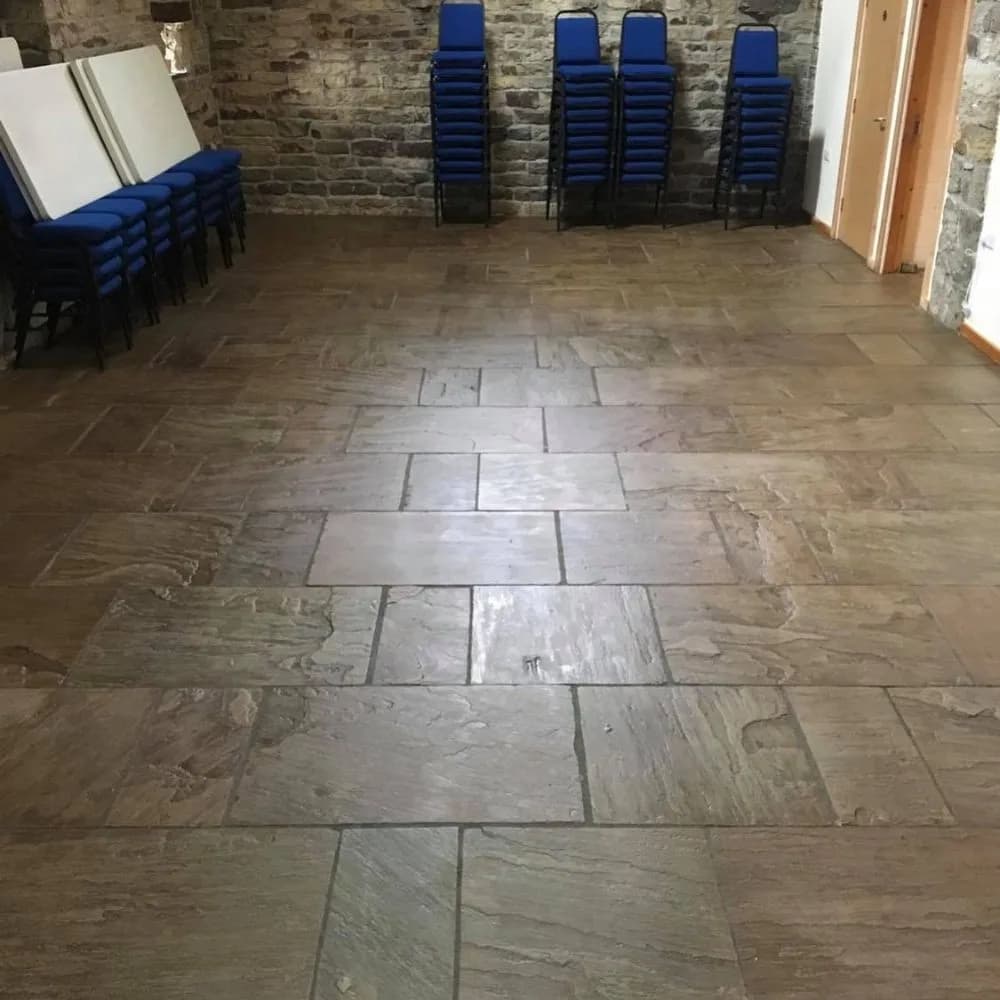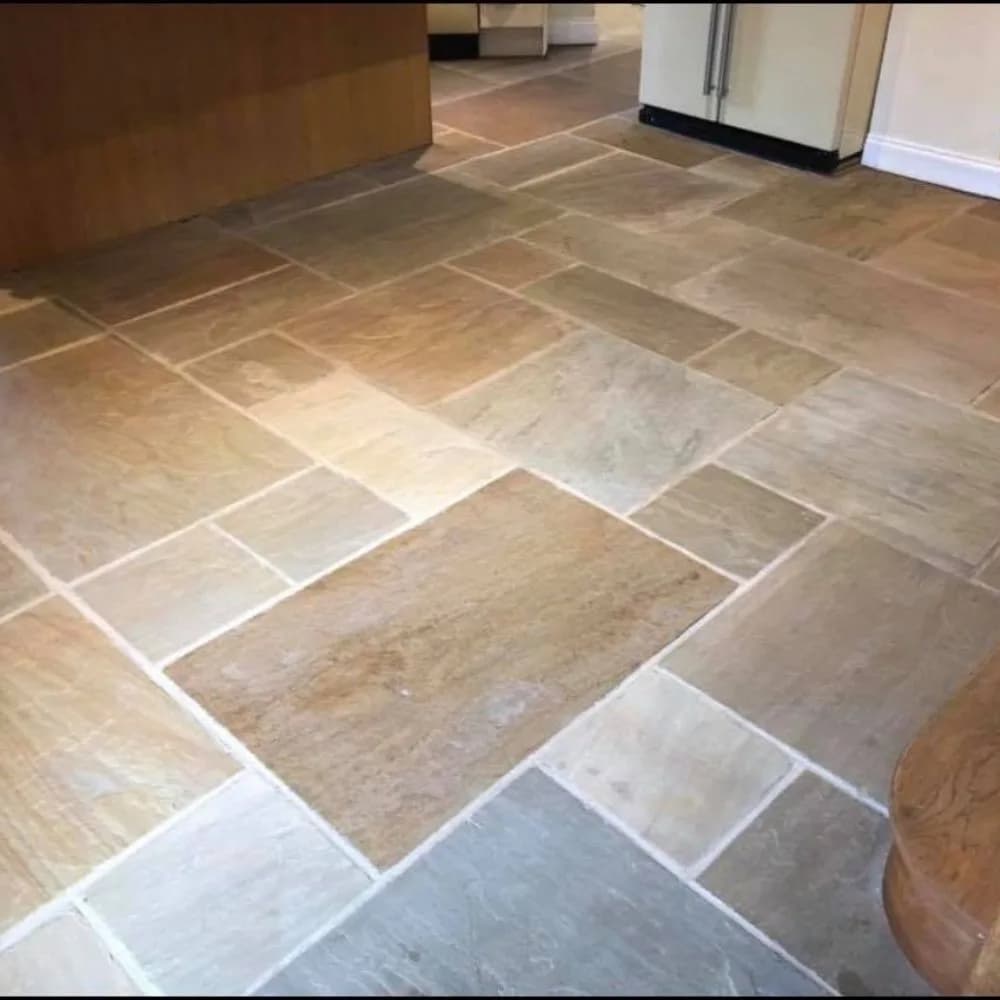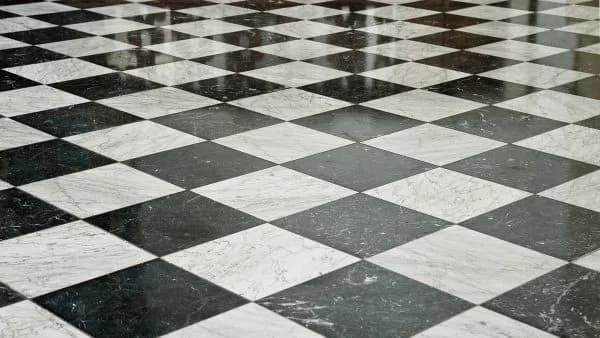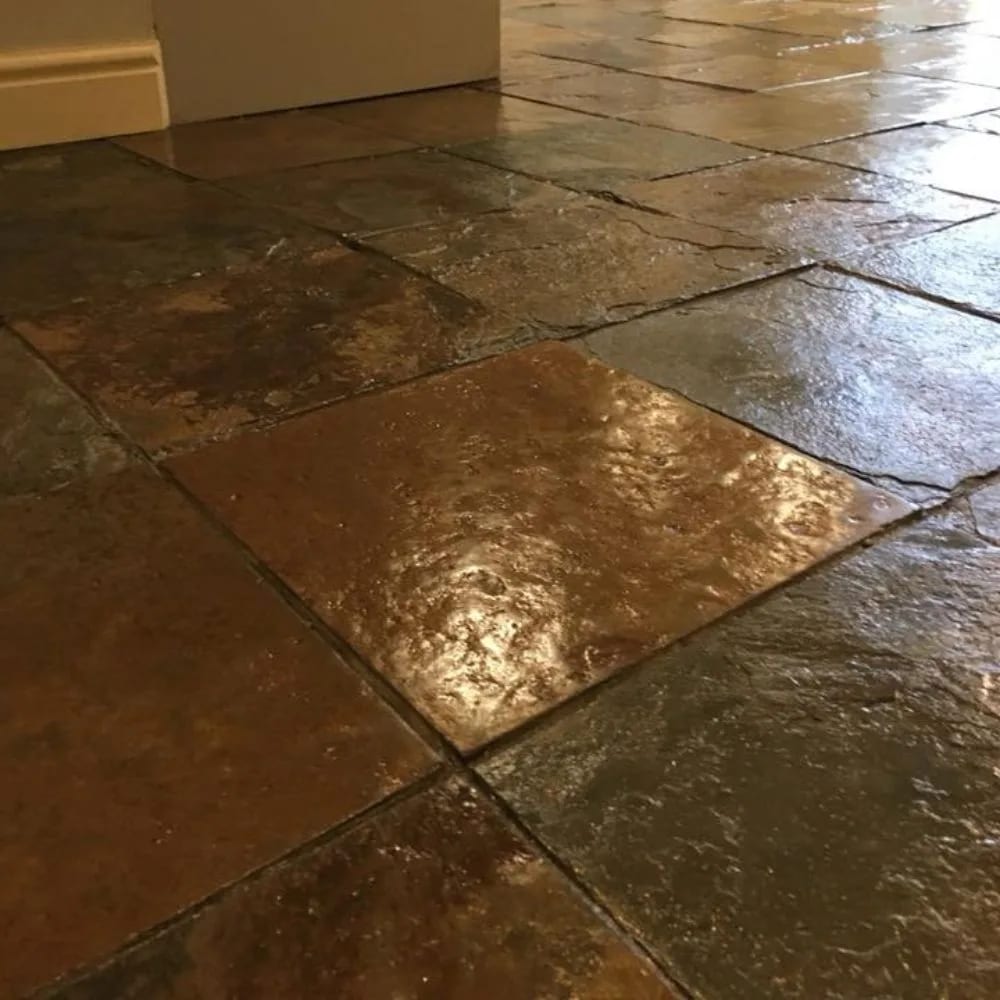
Lift the hall carpet in a Victorian or Edwardian terrace across Sheffield, Barnsley or Huddersfield and there is a fair chance of a tiled floor underneath. Sometimes it is a full geometric pattern with a border running up to the front door. Sometimes it is plain red and black quarries in a kitchen or a back passage. Either way, it usually looks grey, patchy and nothing like the colours it was made in.
Those colours are almost always still there. The trick is knowing which kind of tile you have, what is actually making it dull, and which cleaning methods are safe on it.
Which kind of tiled floor do you have?
Geometric tiles. Small unglazed clay tiles, each a single colour, cut in squares, triangles, rectangles and other shapes and laid together to make the pattern. Typical colours are reds, blacks, buffs and browns, with blue and green used more sparingly because they were more expensive to make.
Encaustic tiles. The patterned ones. The design is not printed or glazed on; it is made from different coloured clays inlaid into the body of the tile, so the pattern goes some way into the tile rather than sitting on the surface. Most are two colours; some have more. In a Victorian hallway they are usually used as feature tiles within a geometric layout, because they cost more.
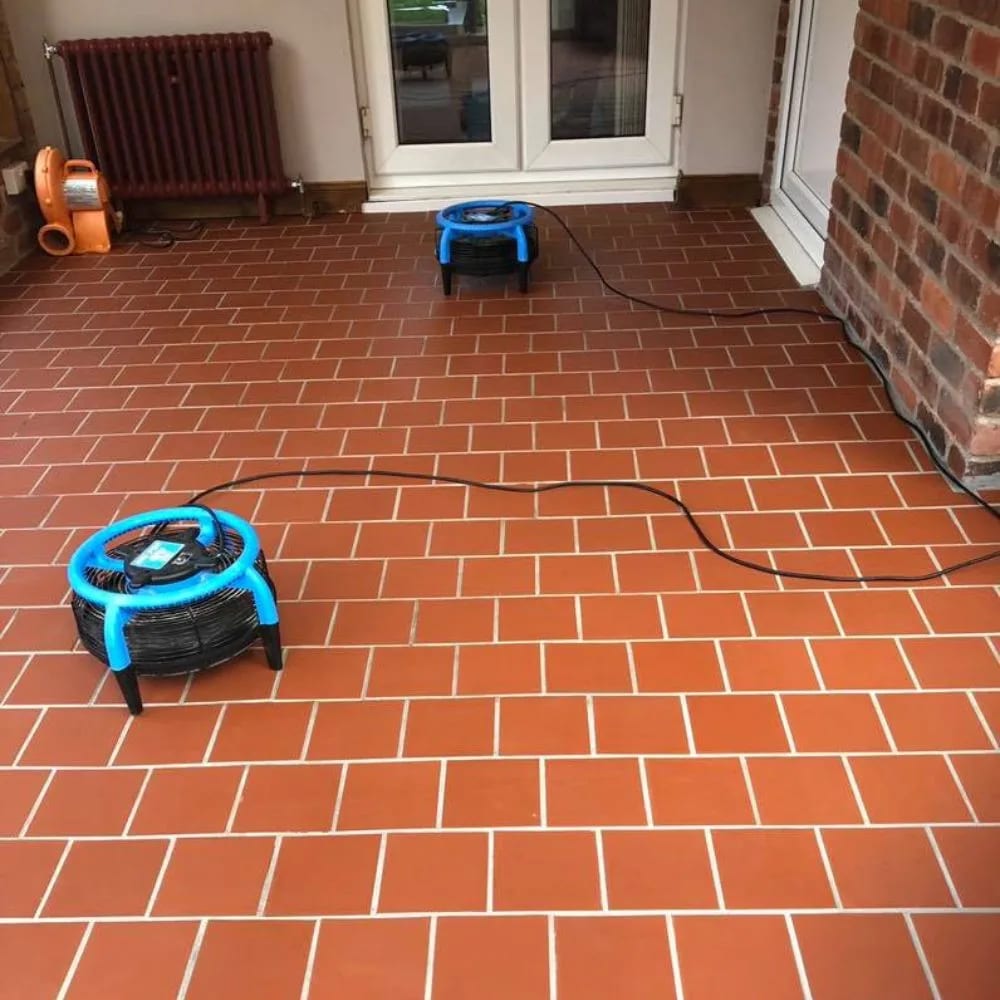
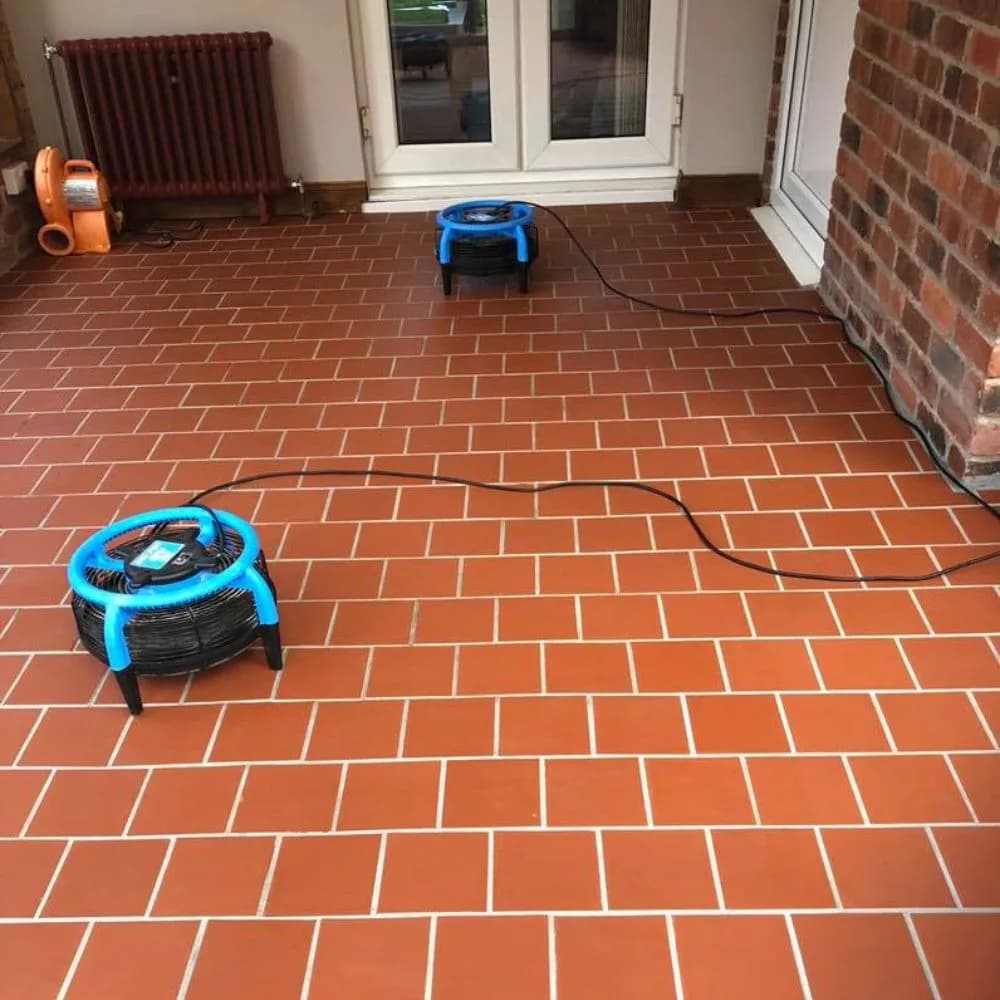
Quarry tiles. Larger, thicker, plain unglazed clay tiles, usually red, buff or black, laid in kitchens, sculleries, porches and outbuildings. Hard-wearing and simple, but porous.
Almost all of these were made unglazed. Glazed floor tiles turn up occasionally, particularly in churches, and they need different treatment, so it is worth knowing if your floor has any. Old floors also mix materials: a tiled hallway often meets a marble or stone threshold, which matters for cleaning.
Why does a Victorian tiled floor look so dull?
Usually it is several things on top of each other.
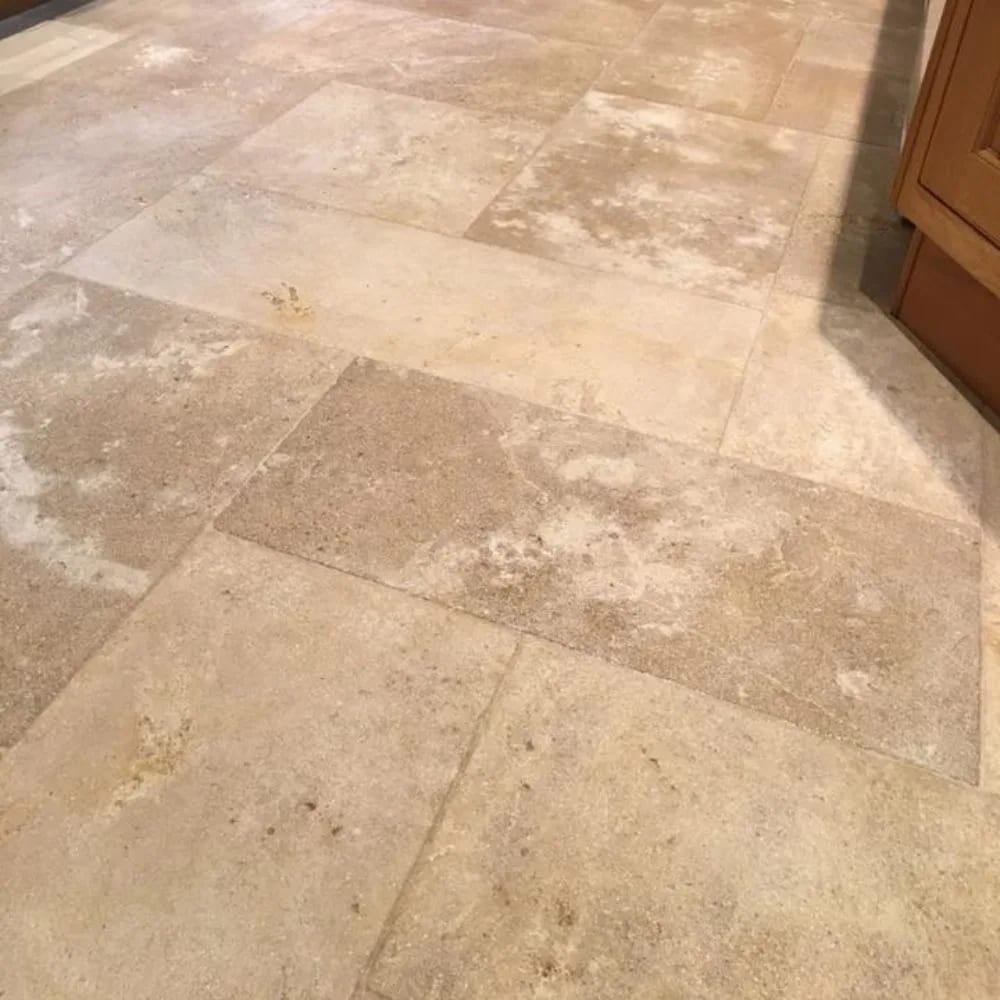
Old wax and linseed oil. For decades, tiled floors were waxed or oiled to bring the colour up. Those coatings soak into the clay, collect dirt, and turn dark. A lot of what looks like black, muddy tile is old coating with a century of grime in it.
Ordinary grime. Clay tiles are slightly porous. Mopping pushes dirty water into the surface and leaves it there to dry, exactly as it does on stone. We explain the mechanism in why your stone floor looks dull however often you mop it.
Cement, adhesive and paint residue. Floors that have been under carpet, lino or a later floor often carry a skin of levelling compound, glue or paint from decorators who assumed nobody would see it again.
Efflorescence. White, powdery or crusty deposits that keep coming back. They are salts carried up through the tiles by moisture from underneath and left behind when the water evaporates. Many Victorian floors were laid without a damp-proof membrane, so this is very common, especially just after a carpet has been lifted and the floor starts to dry out.
How to clean Victorian floor tiles safely
There is no single product that suits every old floor, and the honest answer is that every cleaning job on a historic floor starts with a test on a small area.
The general principles:
- Go gently first. Start with the mildest method that works and step up only where you need to.
- Use as little water as possible. Soaking an old floor can loosen tiles from their bed and drive salts up through the clay. Pick up dirty water rather than spreading it about.
- Alkaline cleaners for old wax and grime. Old coatings and greasy dirt are lifted with a cleaner made for unglazed tile, diluted and worked in small areas, then rinsed off.
- Acid only where it is needed, and only on the right tiles. A dilute acid product is the usual way to deal with cement residue and efflorescence on unglazed fired clay. It is used at the weakest strength that works, kept to the affected areas and rinsed away properly.
- Never use acid on marble or limestone. Thresholds, steps and borders in those stones will be etched permanently. Glazed tiles are also at risk, because some old glazes can be damaged by acid or strong alkali. Those areas are protected or cleaned differently.
- Brush efflorescence off dry first. Washing salts just dissolves them back into the tile. And if the floor is still drying out, they will keep appearing until it has, so sealing has to wait.
On our Victorian floor in Millhouse Green the process was a specialist strip for the old residues, a rotary clean with the dirty slurry extracted, and an acid rinse to neutralise the floor before sealing — chosen for that floor after looking at it.
Replacing broken or missing tiles
Loose, cracked and missing tiles are the most common problems on these floors, and usually there are a few of them, often around the front door or where something heavy was dropped. Loose tiles can usually be lifted, cleaned and re-bedded; cracked tiles that are still firmly fixed have to be cut out with care, because it is easy to damage the neighbours.
Replacements come from two places: reclaimed tiles from salvage, or new tiles made in the traditional colours and shapes. Old sizes are imperial and vary slightly between makers, so a replacement may need trimming or thinning to sit level with the rest of the floor. Lifting and relaying a whole floor is a different matter: many tiles break on the way up, so repairing in place is generally better.
Sealing: breathable matters
Once a tiled floor is clean and properly dry, sealing it stops dirt and spills soaking back into the clay. The choice of sealer depends mainly on what is underneath.
Where there is no damp-proof membrane — which is most original Victorian floors — the floor needs to keep breathing. Moisture comes up from below whether you like it or not; a sealer that traps it at the surface tends to go cloudy or white, or push salts out at the edges. A penetrating, breathable sealer that protects the clay without forming a skin is generally the right choice here.
Surface sealers and polishes give more sheen and can suit a dry floor. The better ones can be stripped and reapplied later, which matters on a floor that will outlive any finish put on it.
Wax and linseed oil are best avoided. They are the reason many of these floors went dark in the first place.
Outside tiles — porch steps and front paths — are a separate case and generally should not be sealed, because it can affect how they cope with frost.
Looking after it afterwards
- Sweep or vacuum regularly. Grit wears the surface and the sealer.
- Mop with a pH-neutral cleaner made for sealed tile, well wrung out. Not bleach, not limescale remover, not supermarket floor "shine" products.
- Put a good mat at the front door to catch grit off the street.
- Do not lay rubber-backed mats or carpet straight onto a floor with no damp-proof membrane. They trap moisture.
Where to go next
- Tile floor cleaning — the service and what a clean involves
- Stone floor cleaning and hard floor restoration
- How to tell which stone your floor is, and why it matters
- Why grout goes dark, and what sealing actually does about it
- Restoring the beauty of Yorkshire stone floors
- Heritage buildings and churches, where tiled floors are part of the fabric
Ask us to look at your tiles
Every job starts with a free, no-obligation visit from Rob, our fully trained floor technician. He looks at the tiles, the grout and any thresholds, carries out a demonstration on a small area so you can see the result on your own floor, and talks through the sealing options.
Floor Angels is a family-run firm, part of Cleaning Angels Yorkshire, and has been restoring floors across South and West Yorkshire since 2007. Call 0114 288 1937 or 07729 345 458, or send us a message.