Most people call us about scratches assuming the floor needs sanding. Quite often it does not. Some of what looks like damage to the wood is damage to the finish on top of it, and that is a much smaller job.
The way to tell is to look closely, in the right light, and know what you are looking for.
Is the scratch in the finish or in the wood?
Get down to floor level with a torch held low across the surface, or look along the floor towards a window.
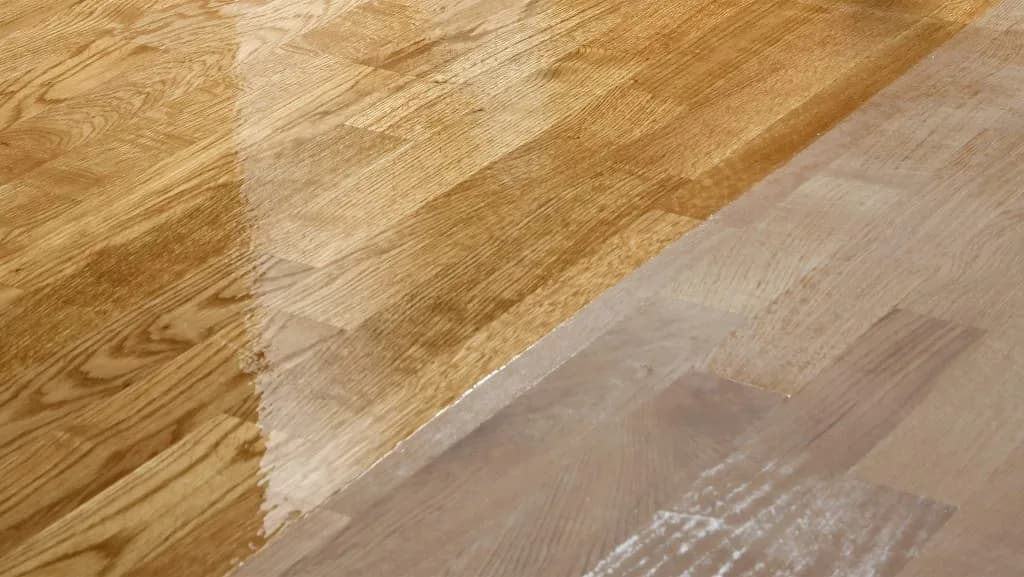
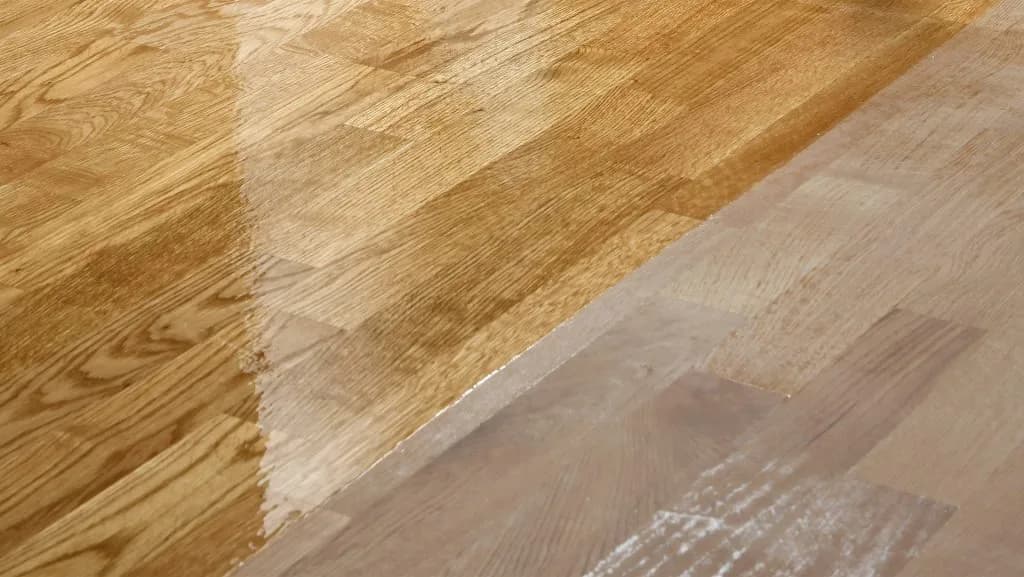
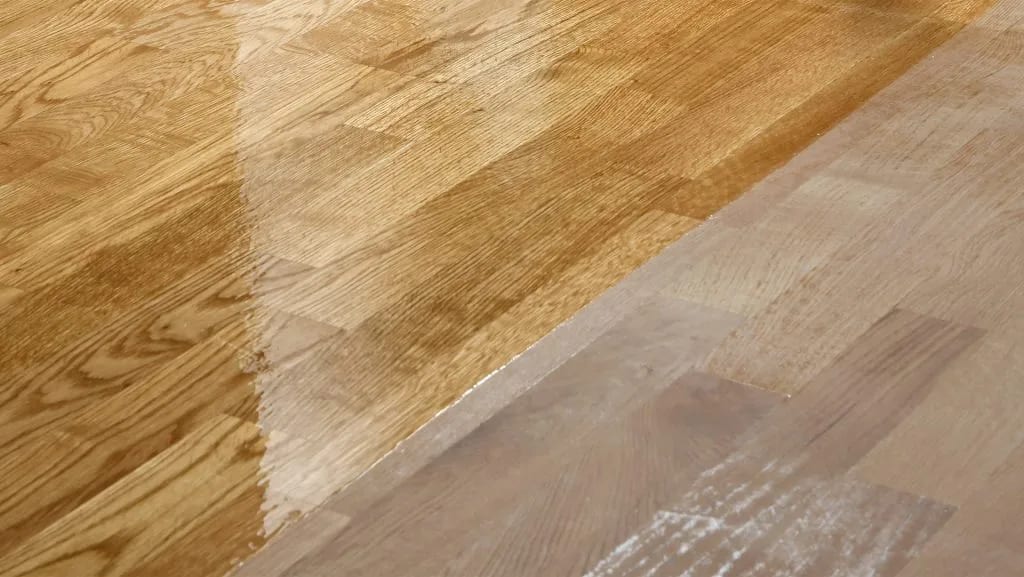
Finish-only damage looks pale, white or grey, and sits on the surface. On a lacquered floor the scratch shows white against the wood because the film is scuffed but the timber under it is untouched. Run a fingernail across it and it barely catches. Fine scuffs in traffic lanes, chair-leg swirls under a dining table and the general haze in a hallway are usually this.
Damage into the wood has depth. Your nail drops into it. The bottom of the scratch is bare timber, usually a different colour from the finished wood around it, and it may have gone grey or dark as dirt has got into it. Deep claw marks, a dropped knife, and a chair dragged with a stone trapped under the leg come into this category.
Worn through is different again. In doorways and down the main route through a room, the finish can wear away completely, leaving dull, grey, unprotected timber. That wood is now taking dirt and water directly.
Dents and scratches are different problems
A scratch removes or cuts material. A dent crushes it.
Dents come from point loads: stiletto heels, the leg of a piano, a dropped tin, a dog landing off the sofa. Softwoods like pine dent much more easily than oak, which is one reason old pine floors carry so many marks. A dent is often in perfect condition at the bottom, finish and all — just lower than the floor around it.
That has two consequences. A buff and recoat will not touch a dent, because there is nothing on the surface to remove. And sanding takes a dent out only by taking the whole surrounding floor down to the depth of the dent, which on a soft board can mean a lot of timber.
Shallow dents in bare wood can sometimes be raised with moisture and heat, because the crushed fibres swell back up. That only works once the finish is off, and it does not work where the fibres have been cut rather than squashed. On a floor that is being sanded anyway, it is worth trying on the worst dents before deciding how deep to go. Otherwise, many dents are best accepted as part of the floor's life.
What a buff and recoat can fix
A buff and recoat — cleaning the floor, abrading the existing finish lightly and putting a fresh coat on — deals with damage that is confined to the finish:
- fine scratches and scuffs that have not reached the wood
- dull, hazy traffic lanes where the finish is worn but still intact
- a floor that has simply lost its sheen
It is quicker, less disruptive and much less costly than sanding, and it takes no timber off the boards. It is the best way to extend the life of a sanded floor.
What it cannot do is fix anything that has gone into the wood. A fresh coat over a deep scratch seals the scratch in rather than removing it. And if the floor was polished with a silicone or "shine" product at some point, a recoat may struggle to bond; that needs checking first.
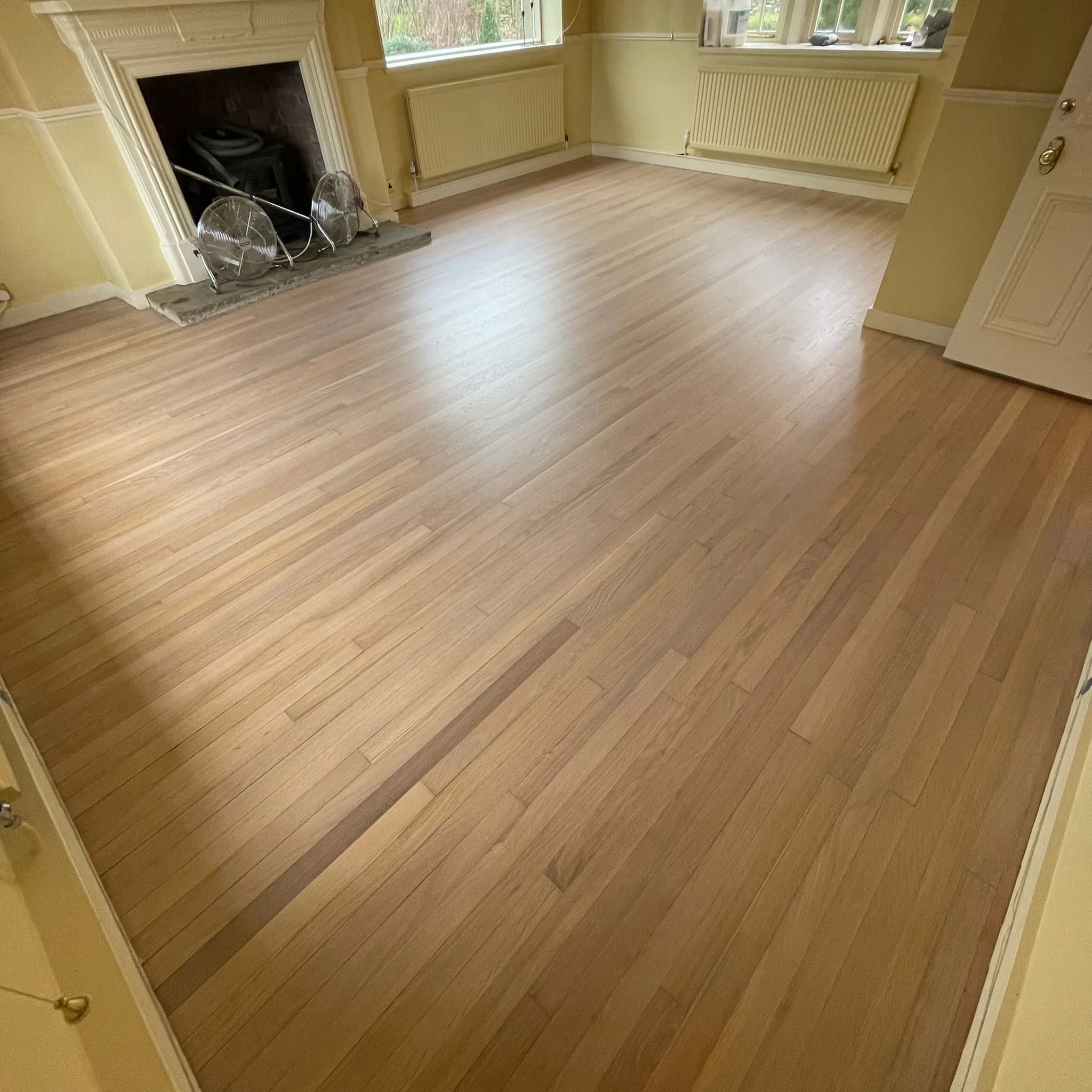
When the floor needs a full sand
- scratches and gouges that go into the timber across a large area
- finish worn through to bare wood, especially if the wood has gone grey or stained
- a lacquered floor with patchy wear, where a recoat over one area would always show
- water damage, black marks or stains in the wood
- a floor that has been finished so many times the surface is uneven
Isolated deep scratches can sometimes be dealt with locally, particularly on an oiled floor, where a patch can be sanded, re-oiled and blended. On a lacquered floor, local repairs nearly always show. We go into that difference in oil or lacquer: which finish for your wood floor?.
If the floor is engineered rather than solid, how much sanding it can take depends on its wear layer. Can engineered wood floors be sanded? explains how to tell.
Which finish resists scratches best?
No finish is scratch-proof. Grit under a shoe or a dog's claws will mark any floor eventually. But finishes do behave differently.
Lacquer is harder. It resists scuffing better than oil, and two-component lacquers — with a hardener mixed in on site — are generally made for heavier wear than single-component products. The drawback is that when a lacquer does scratch, the scratch shows pale against the wood, and it cannot be patched invisibly.
Hardwax oil scratches more easily, but the scratches show less. There is no film to turn white, so a scuff tends to blend into the grain, and worn or scratched areas can be re-oiled on their own. In a house with dogs, a lot of people prefer a floor that marks a little but can be touched up to one that marks less but shows every mark.
The timber matters most. Oak is much harder than pine. A pine floor will dent and mark more whatever goes on top of it, and that character is part of why people love it.
How to stop it happening again
Felt pads on everything. Every chair, table, stool and sofa leg. Replace them when they wear through or pick up grit, and check the dining chairs — they move most and lose pads first. After any repair or refinish, our guide to caring for a newly sanded wood floor covers the first weeks.
Lift, do not drag. Furniture, bins, washing baskets, the Christmas tree.
Entrance mats, inside and out. Most scratches start as grit carried in on shoes. A good mat at every outside door, and a floor that is swept often, stops a lot of it before it does any damage.
Rugs where it matters. Under the dining table, in the hall, and where the dog sleeps. Use an underlay made for wood floors and let a new finish cure fully before laying one.
Keep claws trimmed. Long claws on a running dog will mark any finish. Trimming them regularly makes a real difference, and a runner in the route the dog takes to the door helps.
Office chairs need a mat. Hard castors rolling over the same spot wear through a finish quickly.
Heels off at the door. One person in narrow stilettos puts far more pressure on a small area than a much heavier person in flat shoes, which is why heel dents appear in floors that otherwise stand up well.
Where to go next
- Wood sanding and finishing and floor sanding across Yorkshire
- Restore your wood floors to perfection
- Pine floorboards — why old pine marks the way it does
- Commercial floor restoration, where chairs and footfall do the damage
Ask us whether it needs sanding
Every job starts with a free, no-obligation visit from Rob, our fully trained floor technician. He will tell you honestly whether your scratches are in the finish or the wood, and whether a recoat will do or the floor needs sanding.
Floor Angels is a family-run firm, part of Cleaning Angels Yorkshire, restoring floors across South and West Yorkshire since 2007. Call 0114 288 1937 or 07729 345 458, or send us a message.