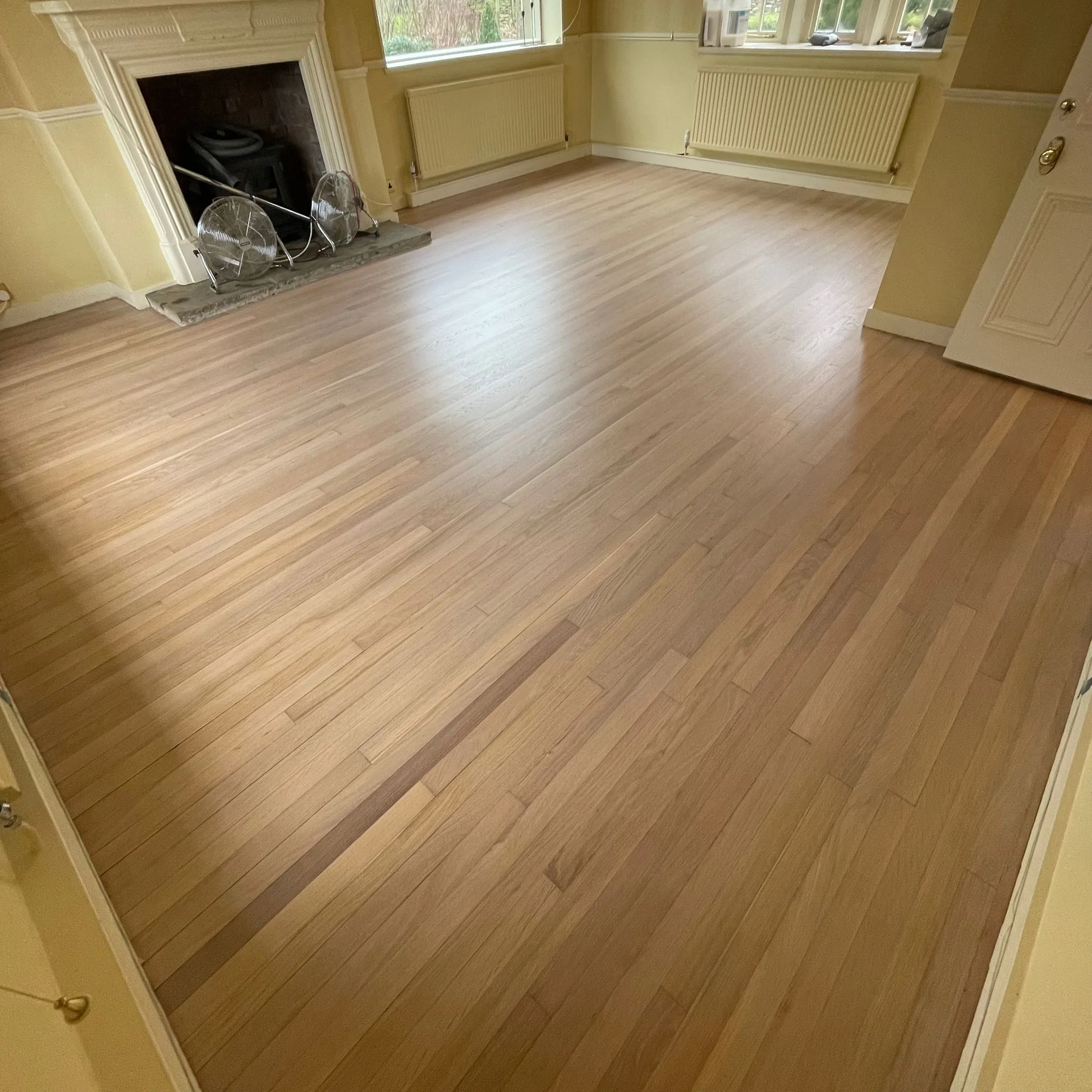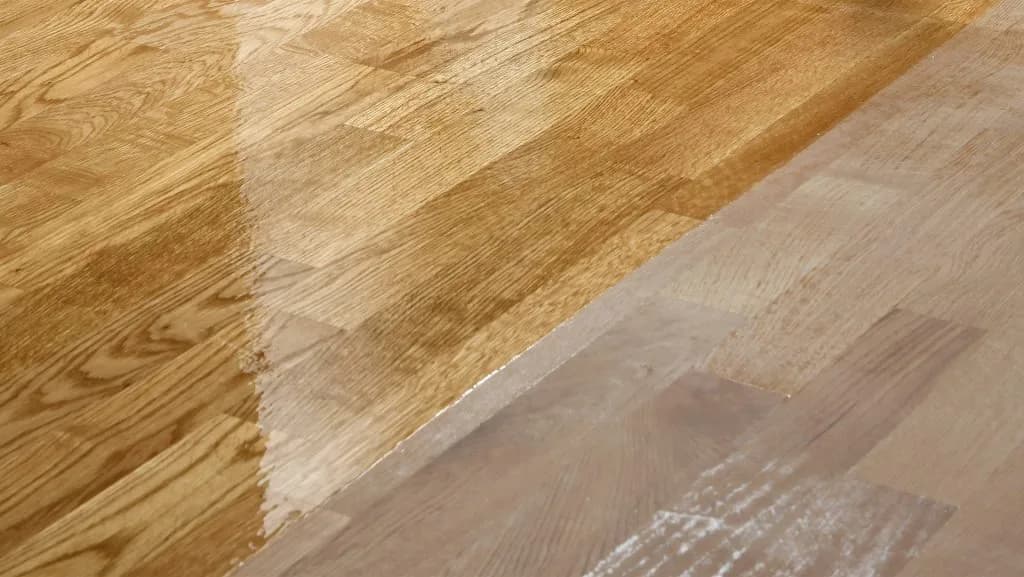
Once a floor has been sanded, you have a decision to make, and it is the one customers find hardest. The sanding is the same either way. What goes on top changes how the floor looks, how it behaves, and what happens in five years when somebody drags a chair across it.
The short version: lacquer is harder, oil is easier to repair. Work from there.
The two families
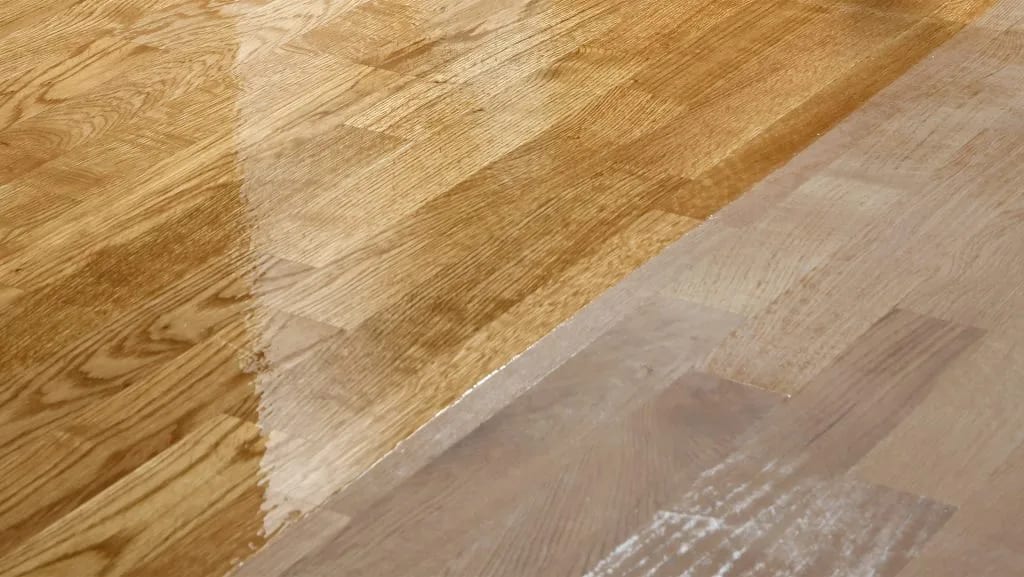
Lacquer — sometimes called varnish or a sealer — sits on the surface as a film. The wood is underneath a transparent layer that takes all the wear. Modern floor lacquers are water-based, dry fast and are tough.
Hardwax oil soaks into the timber and hardens inside it, leaving a thin wax at the surface. There is no film sitting on top. You are touching wood rather than a coating.
Everything else follows from that one difference.
| Lacquer | Hardwax oil | |
|---|---|---|
| Where it sits | On the surface as a film | Soaked into the wood |
| Feel underfoot | Smooth, slightly plastic | Natural, you feel the grain |
| Appearance | Matt to high gloss; can look "coated" | Natural, deepens the grain |
| Hardest wearing | Yes | Good, but wears sooner |
| When it is damaged | Scratches show white against the wood | Scratches blend; the wood is still the surface |
| Repairing one patch | Not really — the area needs recoating | Yes. Clean, re-oil the patch, blend it in |
| Routine upkeep | Sweep and damp mop | Sweep and damp mop, plus re-oil occasionally |
| Doing it again in ten years | Sand back and recoat | Often just a clean and fresh coat of oil |
| Water | Very good while the film is intact | Good, but standing water should not sit |
The thing most people get wrong
People choose on hardness. Lacquer is harder, so lacquer wins, so they pick lacquer.
But a floor finish does not fail by wearing evenly. It fails in patches — the doorway, the spot in front of the sink, the line between the kitchen and the hall, the bit under the dog's bed. And the two finishes behave completely differently when that happens.
When lacquer wears through in a traffic lane, you cannot feather a repair into it. The film has to be cut back and recoated across the whole area, and a recoated patch next to an older one is usually visible. In practice a worn lacquered floor means doing the whole room.
When oil wears thin in the same spot, you clean the area and apply more oil. It blends, because there is no film edge to see. One person, one afternoon, no machines.
So the honest question is not "which is harder" but "who is going to look after this floor, and how much hassle will they tolerate?"
Which suits which room
Kitchens and hallways — the busiest, dirtiest floors. Lacquer if nobody is going to maintain it and you would rather do a big job rarely. Oil if somebody will keep on top of it and you want the wear to stay invisible between times.
Living rooms and bedrooms — low traffic, so either works. This is where the decision is mostly about how you want it to look, and oil generally wins on appearance.
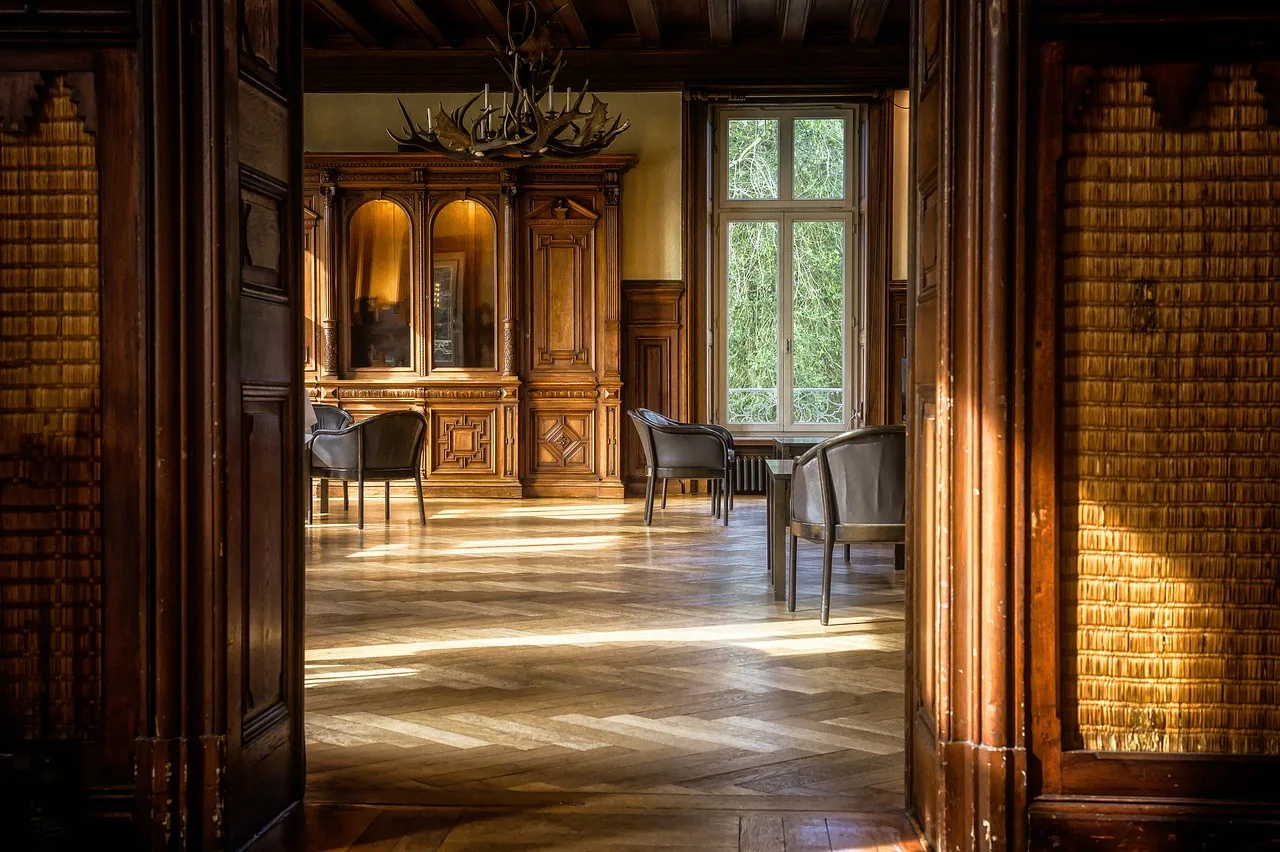
Big old floors in period houses — oil, usually. Old pine and old oak look wrong under a film, and on a large floor the ability to repair one area without redoing the lot is worth a great deal. Our pine floorboards post goes into how these floors behave.
Commercial floors — depends entirely on who cleans them. A bar or a shop with a contract cleaner and a wet mop every night is usually a lacquer job. Somewhere with a caretaker who will look after a floor properly can take oil and gain the easy repairs. More on that in commercial floor restoration.
Sports halls — a specialist case, because the finish has to suit the sport as well as the traffic. A beautiful slippery floor is worse than useless.
Three things that are not true
"Oiled floors need constant maintenance." They need re-oiling occasionally in the busy areas. That is less work in total than sanding a whole room back because the lacquer went.
"Lacquer looks cheap." A good matt lacquer on a well-sanded floor looks excellent. The plastic look people remember is high-gloss lacquer from thirty years ago.
"You can just put oil over lacquer" — or the other way round. You cannot. The old finish has to come off first, which is a sanding job. Deciding on a finish is therefore a once-a-decade decision, not something to change your mind about next year.
Stain is a separate question
Colour is decided before the finish goes on, not by it. A floor can be stained and then either oiled or lacquered, and oils are also available with colour in them. We walk through the staining process in staining a newly sanded wood floor.
One warning worth repeating: stain goes on bare, freshly sanded timber and it is unforgiving. It is also where DIY jobs most often go wrong, because a patchy stain cannot be corrected without sanding the floor again.
How we decide with you
Every job starts with a free, no-obligation visit from Rob, our fully trained floor technician. He surveys the floor properly, carries out a demonstration on a small area so you can see the result on your own floor rather than somebody else's, and talks through the finish you want.
On the finish specifically, we would rather show you than describe it. Seeing both on your own timber, in your own light, settles the question in about a minute — pine, oak and old reclaimed boards all take finishes differently, and a sample board in a showroom tells you very little about your floor.
Then it is your decision. We will tell you what we would do and why, including when the cheaper option is the right one.
Where to go next
- Wood sanding and finishing — the service
- Floor sanding across Yorkshire — how the process runs
- Floor sanding training — if you would rather learn to do it yourself
Ask us to look
Floor Angels is a family-run firm, part of Cleaning Angels Yorkshire, and has been restoring floors across South and West Yorkshire since 2007 — Sheffield, Barnsley, Huddersfield, Holmfirth and the villages between them.
Call 0114 288 1937 or 07729 345 458, or send us a message, and we will come out, look at the floor and tell you honestly what can be done with it.