Most of the wood floors we restore are somewhere between thirty and a hundred and twenty years old. Church floors routinely beat that, and they come with three complications a domestic floor does not have.
They are irreplaceable. The building is still in use. And somebody — a PCC, a trust, a conservation officer — has to be able to justify the decision afterwards.
Older wood behaves differently
A Victorian pitch pine church floor and a modern oak one are not the same material, whatever the sander thinks.
It is softer and often thinner than it looks. A hundred years of cleaning, polishing and foot traffic has already taken material off, and these boards were not milled to a consistent thickness to begin with. Assuming you have the depth to sand aggressively is how a board ends up with a nail head proud of it.
The fixings have moved. Cut nails work up as boards shrink and swell through a century of unheated winters. Every one of them has to be found and punched down before a machine goes anywhere near, because a single proud nail will shred a drum belt and gouge the board.
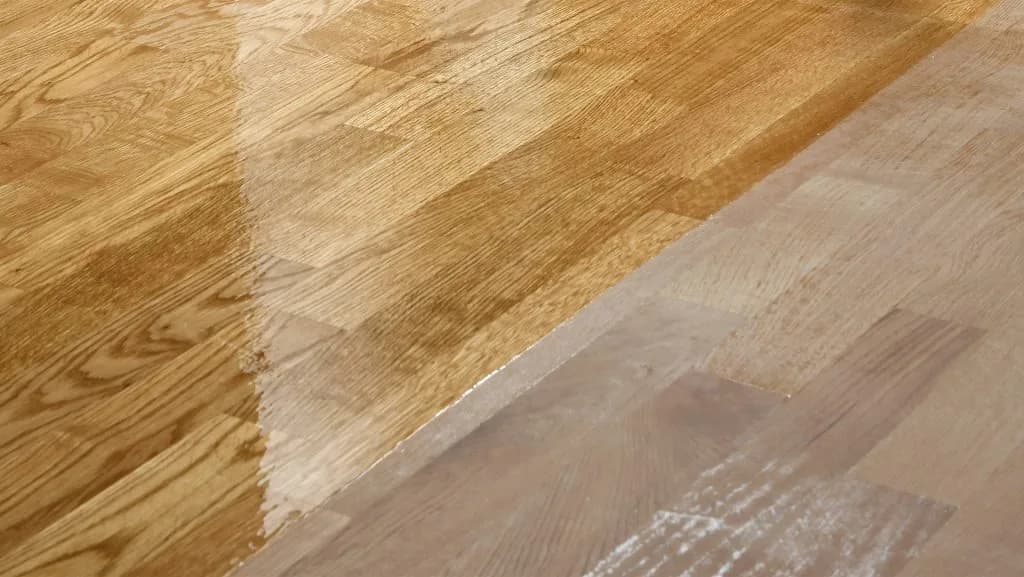
There is usually history in the surface. Old wax, old varnish, sometimes decades of polish layered on top of each other, and in places genuine patina — the darkened, worn, slightly uneven surface that makes an old floor look old. Removing all of it is easy. Knowing how much to leave is the actual skill, and it is the difference between a restored church floor and a church floor that now looks like a new one.
Boards are not standard. When a board has to be replaced, matching hundred-year-old pitch pine is a sourcing problem, not a trip to a merchant. Reclaimed, usually, and matched by eye.
The building does not close
This is the practical constraint that shapes everything else. A church has services, weddings, funerals, playgroups, concerts, coffee mornings and a diary that was set months ago.
We work to that diary rather than against it. In practice that means sectioning the work so parts of the building stay usable, timing the noisy stages around the services that cannot move, and being realistic in advance about which days genuinely cannot be touched.
It also means dust-free sanding is not a nice-to-have. In a building full of soft furnishings, hangings, an organ, memorials and often several centuries of plaster, fine dust settling everywhere is a problem that outlasts the job by months. Our sanding extracts at the cutting head rather than putting it into the air, and in a church that single difference does more than any other to keep the work manageable.
Pews, memorials and everything fixed down
Domestic floors have furniture you move. Churches have things you do not.
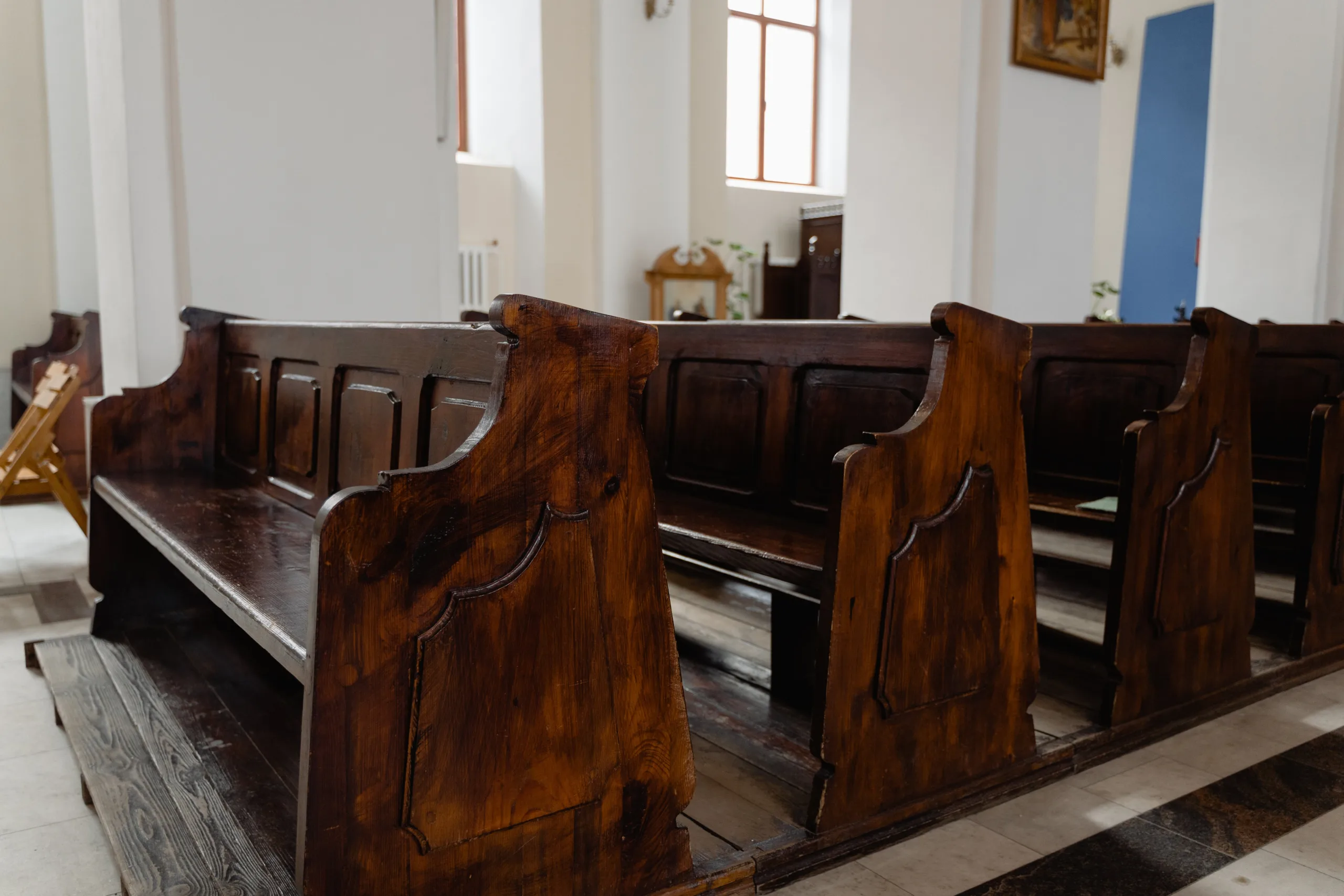
Fixed pews, memorial slabs set into the floor, brasses, organ platforms, font surrounds, heating grilles. Some can be lifted and should be. Some must not be touched at all. The survey is largely about establishing which is which, and about agreeing where the work stops before anyone starts.
Every job starts the same way: a free, no-obligation visit from Rob, our fully trained floor technician. He carries out a demonstration on a small area so you can see the result on your own floor rather than somebody else's, surveys the floor properly to identify what it actually is, and talks through the finish you want. We will advise — but the decision on the finish is yours.
On a church that survey takes longer and produces more questions than a domestic one, which is as it should be.
If the building is listed
A good many Yorkshire churches are listed, and a good many parish halls and chapels sit inside conservation areas.
The honest position: consent is the building's responsibility, not ours, and we are not the people to tell you whether your proposed work needs faculty permission or listed building consent. What we can do is describe precisely what is proposed — what will be removed, what will be left, what finish goes on and whether it is reversible — in terms an architect, an archdeacon or a conservation officer can actually assess.
Most of the questions that come back are about reversibility and about appearance, and both are easier to answer before the work than during it.
Finishes for a building in use
A church floor takes a particular kind of punishment: heavy concentrated traffic in aisles and doorways, almost none under the pews, water in from the porch all winter, and long periods with no heating at all.
That argues for a finish that can be repaired in sections rather than one that has to be stripped and redone in full. A hardwax oil can be refreshed in the aisle without touching the rest of the building; a worn patch of lacquer generally means recoating the area. Which is right depends on the floor and on who will be looking after it afterwards — and that second question is worth asking, because the volunteer who cleans the church on a Saturday morning is the person who will determine how the floor looks in five years.
We work on these buildings regularly
Churches, chapels, grade-listed properties and historic halls across Yorkshire — a region with more of them per square mile than most. The approach combines modern dust-free equipment with the older techniques these floors were built around, because a floor laid in 1890 does not always respond to a method designed for engineered oak.
Where to go next
- Church wood floor sanding — the full service and how a project runs
- Heritage buildings floor sanding — grade-listed and historic properties
- Community centres and village halls — the same problem on a smaller budget
- Why restoring natural wood floors beats replacing them
Book a survey
Floor Angels is a family-run firm, part of Cleaning Angels Yorkshire, and has been restoring floors across South and West Yorkshire since 2007 — Sheffield, Barnsley, Huddersfield, Holmfirth and the villages between them.
Call 0114 288 1937 or 07729 345 458, or send us a message, and we will come out, look at the floor and tell you honestly what can be done with it.