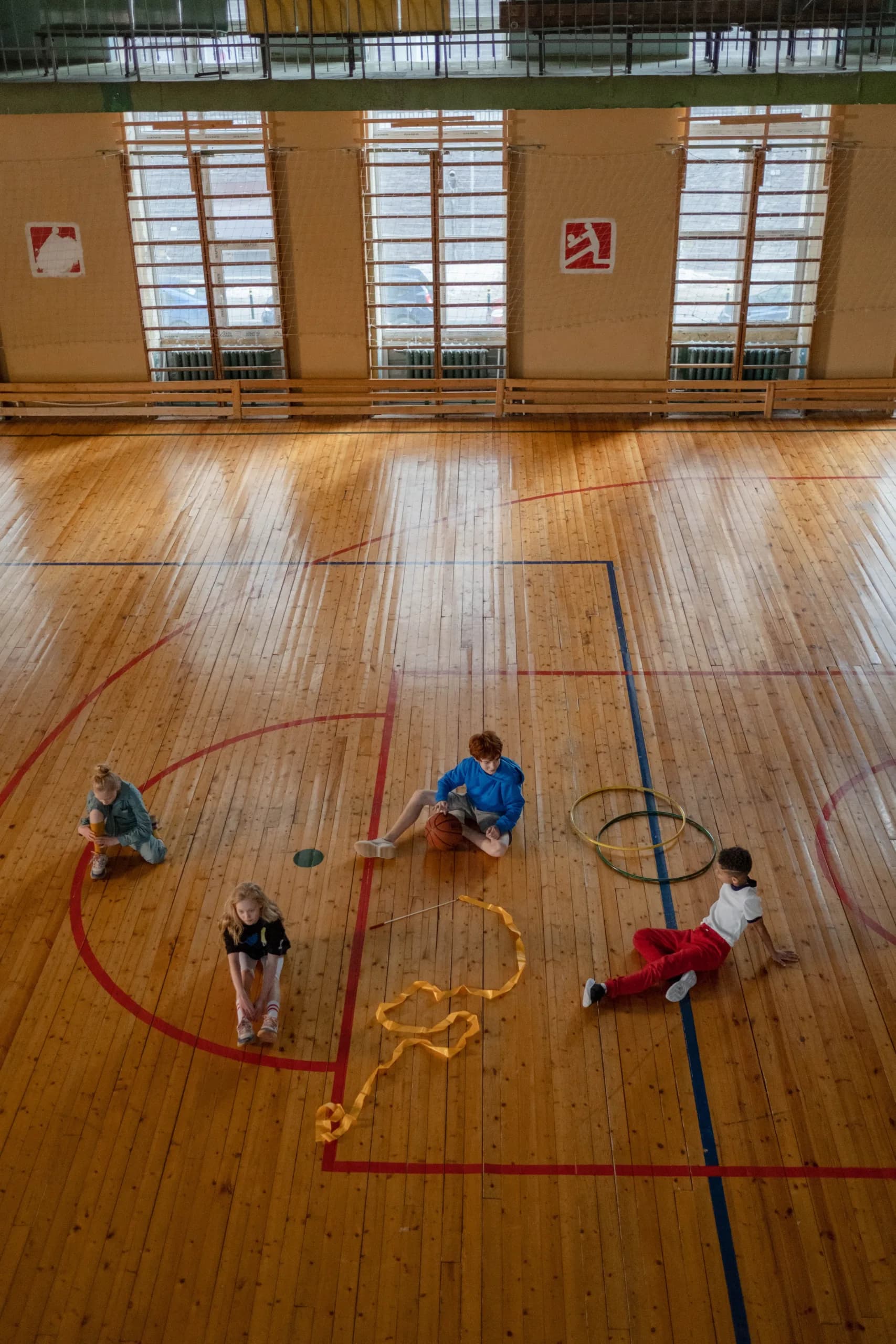
A school hall and a village hall have the same floor problem and the same real constraint. The floor is tired, everyone agrees it needs doing, and there is no obvious week in the year when the building is empty.
That constraint is solvable. It is mostly about sequencing, and about not filling the building with dust.
What these floors actually suffer
They take a kind of wear domestic floors never see.
Concentrated traffic on fixed routes. Doorways, the line from the entrance to the stage, the route to the kitchen hatch. The rest of the floor can be near perfect while those lanes are worn through to bare wood.
Point loads. Stacking chairs dragged rather than lifted, tables with no feet left on them, staging wheeled across, a piano moved once a year by whoever is available. Every one of those leaves a mark, and dragged chair frames do more damage to a hall floor than a thousand pairs of shoes.
Sports marking and tape. Court lines that have been painted over each other, and years of gaffer tape residue from one-off events, which is its own small nightmare to remove.
Water. From the entrance in winter, from the kitchen, from spills nobody reported. Hall floors are often the oldest thing in the building and the least likely to have been sealed recently.
Polish build-up. Decades of it in some village halls, going yellow and holding dirt. A surprising number of "worn out" hall floors are not worn out at all — they are under a quarter-century of polish.
That last point is worth taking seriously before anyone budgets for a new floor. Restoring a wood floor is very often cheaper than replacing it, and on a hall floor the gap is usually large.
Working around a timetable
The process is the same as any wood floor restoration. The planning is not.
The survey comes first, and it is about logistics as much as timber. What the floor is, how much material is left, what is under the polish — and alongside that, what the building's week actually looks like, which areas can be closed and when, and what absolutely cannot move.
Preparation. Furniture and equipment out, adjacent surfaces protected, and any subfloor or structural problems dealt with before sanding rather than discovered during it. In a hall this stage is usually the one that needs the most hands, and it is worth agreeing in advance who is providing them.
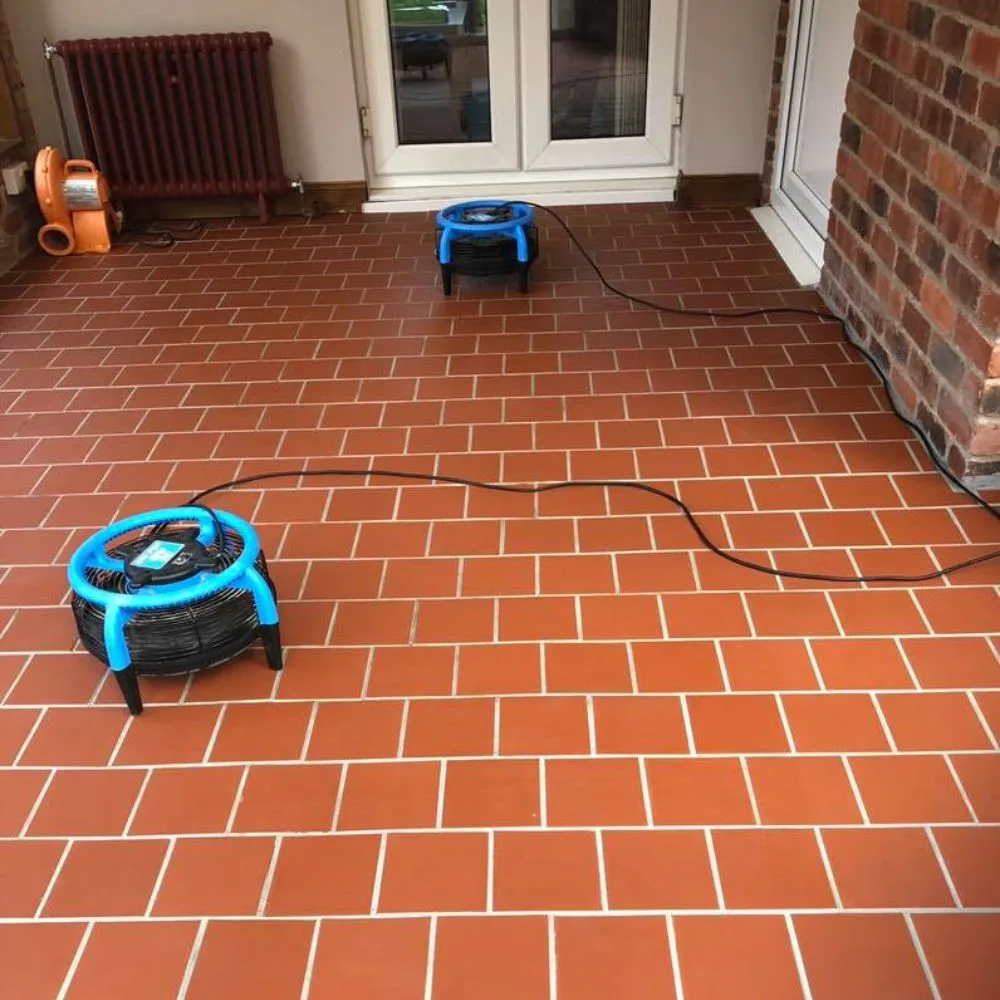
Dust-free sanding. The old finish and the damage come off with extraction at the machine rather than dust into the room. In an occupied building this is the thing that makes the rest possible — it is the difference between closing one area and closing the building.
Repairs and board replacement. Splits, gaps, failed boards and holes left by old fixings, made good and levelled.
Staining and finishing, to whatever the building needs.
A final inspection before it goes back into use.
Sectioning the work is what makes it fit. A hall can often be done in halves, or over a series of weekends, or in the gaps either side of a half term. It takes longer in total than closing the building would, and it costs less than cancelling six weeks of bookings.
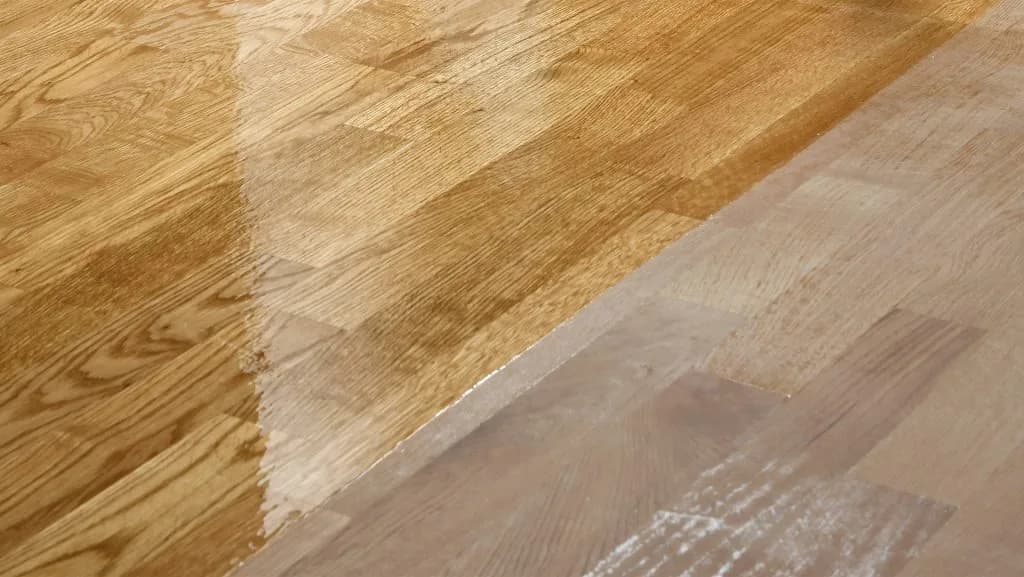
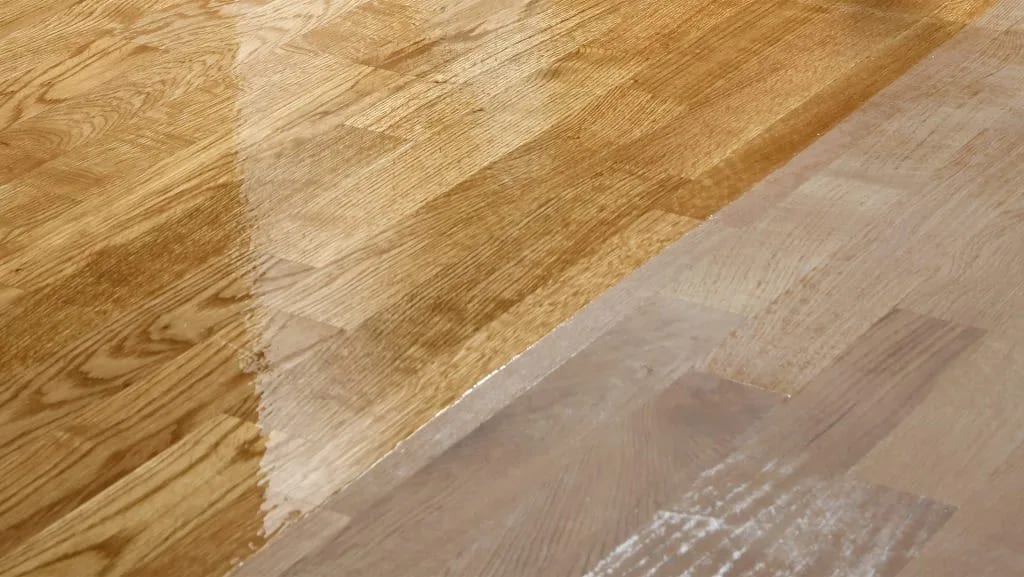
Every job starts the same way: a free, no-obligation visit from Rob, our fully trained floor technician. He carries out a demonstration on a small area so you can see the result on your own floor rather than somebody else's, surveys the floor properly to identify what it actually is, and talks through the finish you want. We will advise — but the decision on the finish is yours.
For a committee or a business manager, that demonstration is often the useful bit — it is much easier to get a decision agreed when people can see a cleaned patch of their own floor rather than a photograph of somebody else's.
Why dust-free matters more here
In a school there are children, asthma plans, IT equipment and food preparation in the building. In a village hall there are soft furnishings, stacked chairs, a kitchen and usually a stage full of things nobody has moved in years.
Fine sanding dust gets into all of it, stays for months, and gets re-disturbed every time anything is moved. Extraction at the cutting head removes the problem at source rather than managing it afterwards, which is why we use it everywhere but why it genuinely decides whether a job in an occupied public building is viable at all.
It also means the floor can go back into use sooner, because there is no second phase of cleaning the whole room down before anyone can set up for Monday.
Choosing a finish for a public building
Two questions decide it: how hard will it be hit, and who will look after it?
For sports halls there is also a third — the finish has to suit the sport, and a floor that is beautiful and slippery is worse than useless.
What we would raise with any committee is maintenance. A hall floor that gets swept, mopped sensibly and has felt pads on the chair frames will hold its finish for years. One that gets a strong product and a wet mop every fortnight will not. Agreeing that before the work, with whoever actually does the cleaning, is worth more than any upgrade in the specification.
The buildings we do this in
Schools, sports halls, classrooms and assembly halls; village halls, community centres and church halls; offices, shops and commercial premises across Yorkshire. Different buildings, the same constraint — the work has to happen around the people who need the room.
Where to go next
- Schools, sports halls and assembly halls
- Community centres and village halls
- Commercial floor restoration
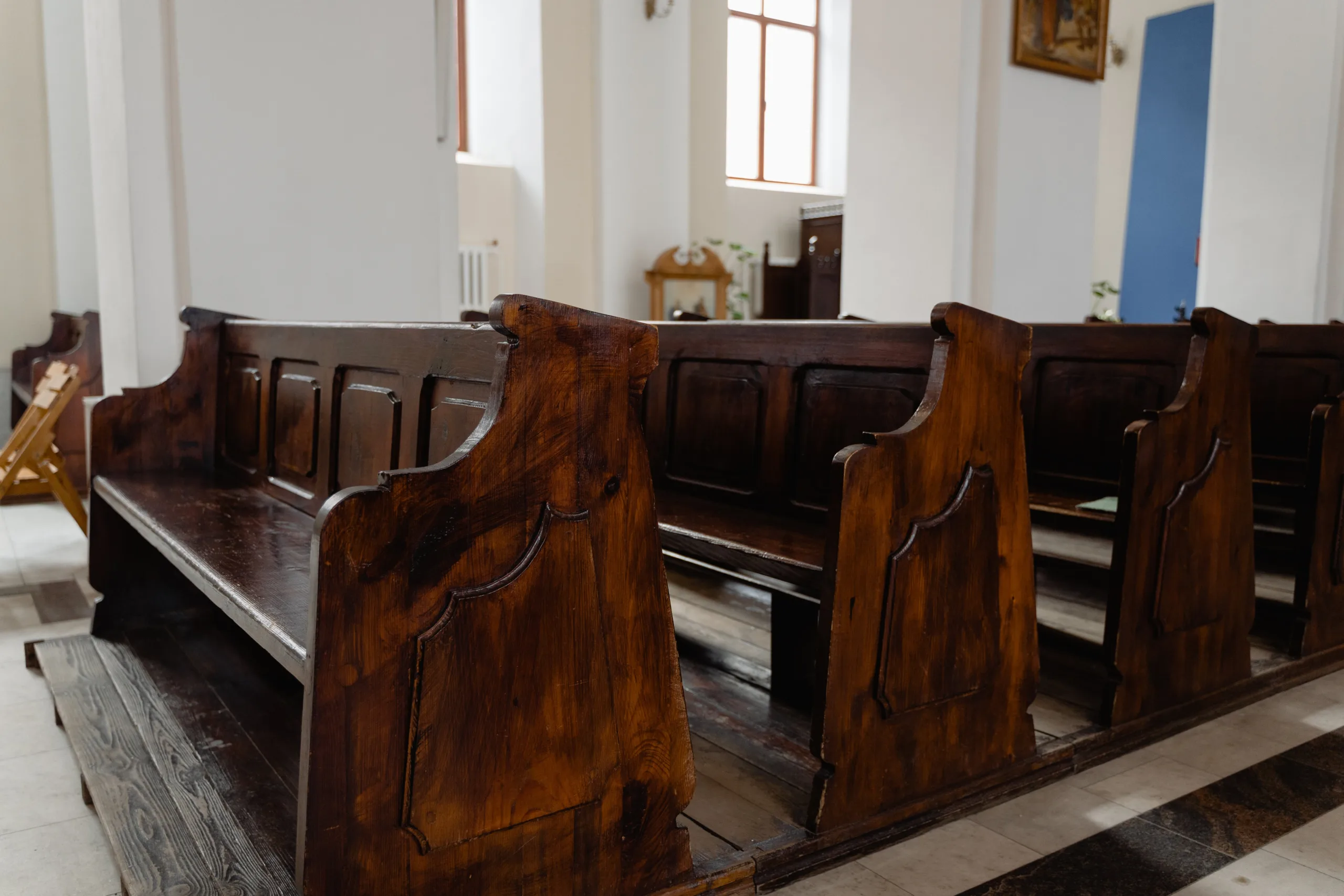
- Churches and chapels — where the building is also listed
- Wood restoration training — if someone on site wants to learn to look after it properly
Book a survey
Floor Angels is a family-run firm, part of Cleaning Angels Yorkshire, and has been restoring floors across South and West Yorkshire since 2007 — Sheffield, Barnsley, Huddersfield, Holmfirth and the villages between them.
Call 0114 288 1937 or 07729 345 458, or send us a message, and we will come out, look at the floor and tell you honestly what can be done with it.