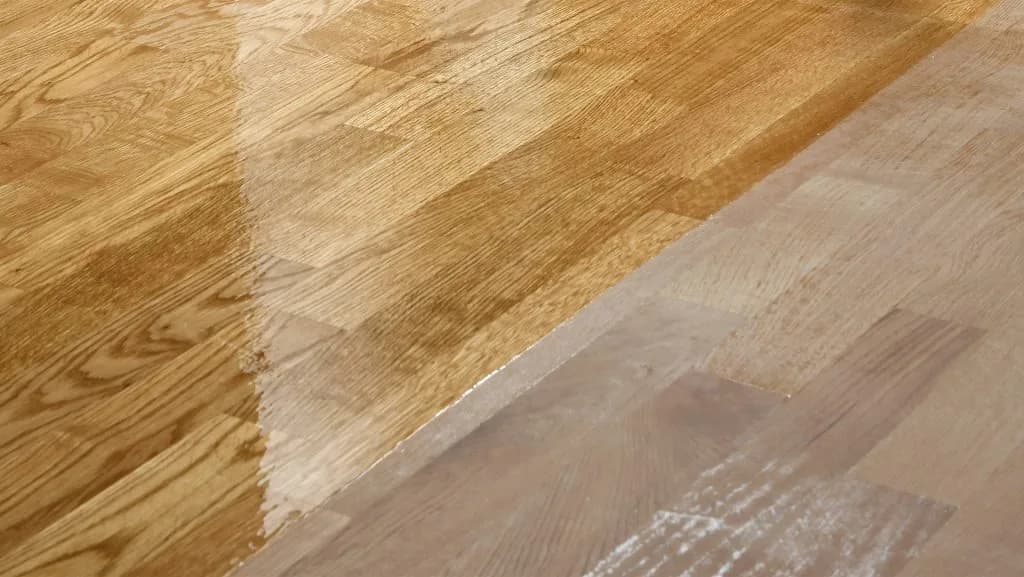
Here is the sentence we hear most often on a stone floor survey: "I mop it twice a week and it still looks grubby."
Twice a week is the problem.
What a mop actually does to stone
Natural stone is porous. Not dramatically — you cannot see it happening — but enough that the surface behaves more like very fine sponge than like a sheet of glass.
A mop lifts the loose dirt off the top. Everything else goes into a bucket, gets progressively dirtier, and then gets spread back across the floor and left to dry into those pores. And it is not only soil going in. Most supermarket floor cleaners are formulated to leave a film behind so the floor looks glossy as it dries. On stone that film builds up week by week, holds grit, and turns grey.
So the floor gets washed more often, with a bit more product each time, and gets duller. By the time we are called, the floor usually has years of it locked in — which is also why it comes back so dramatically when it finally comes out.
It is not the same problem on every stone
Yorkshire houses throw up all four of these regularly, and they do not behave alike.
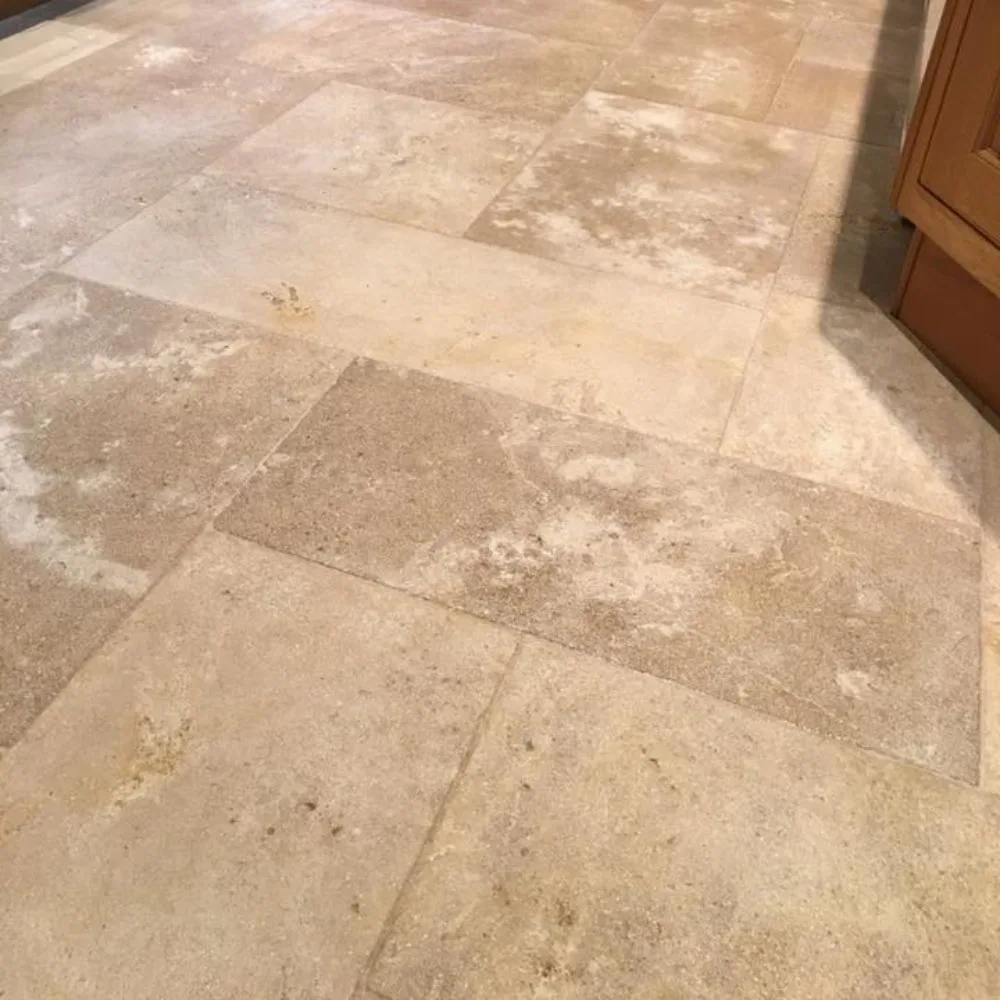
Travertine is a limestone formed near mineral springs, full of natural voids. Beautiful, and the softest thing on this list. It etches on contact with anything acidic — lemon, vinegar, limescale remover, a lot of bathroom sprays. An etch is physical damage to the surface, not a stain, and no amount of cleaning removes it.
Limestone turns up constantly in older Yorkshire buildings, churches especially. Porous, available in a huge range of colours and textures, and genuinely lasts a lifetime if it is looked after. Same acid problem as travertine.
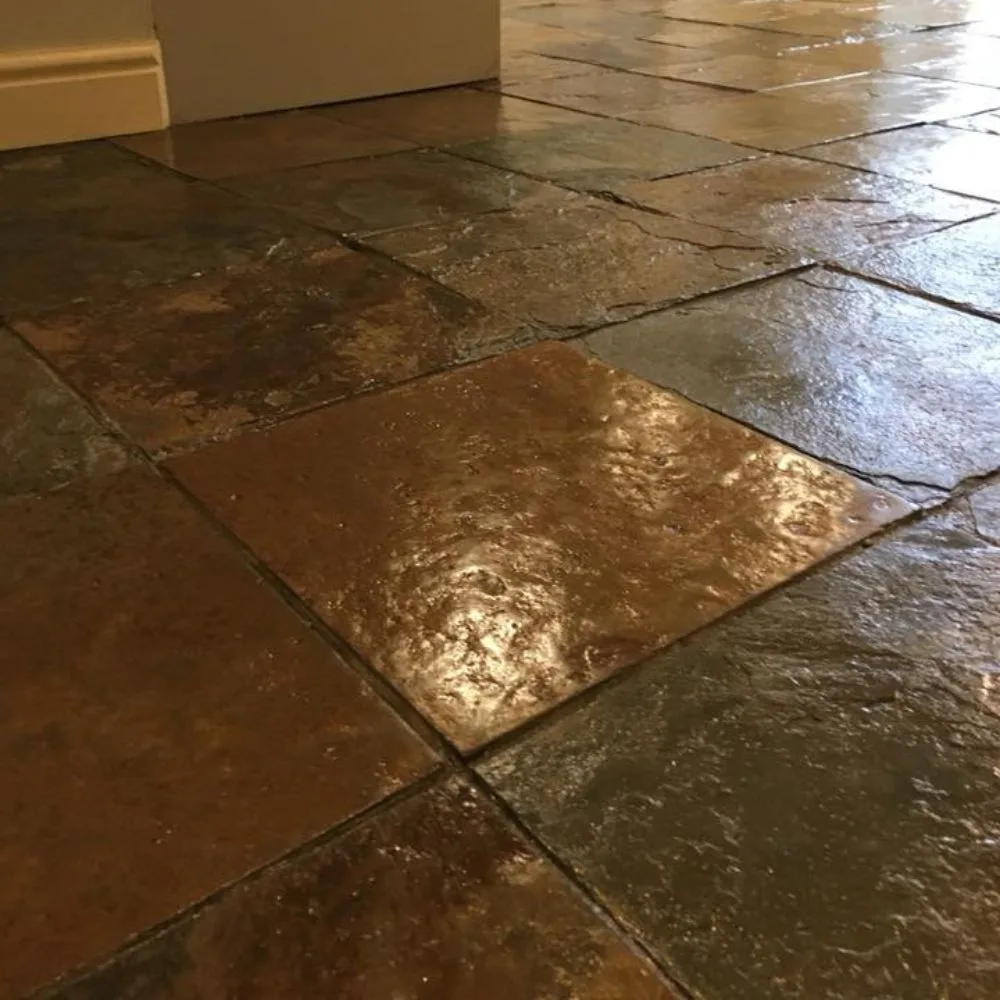
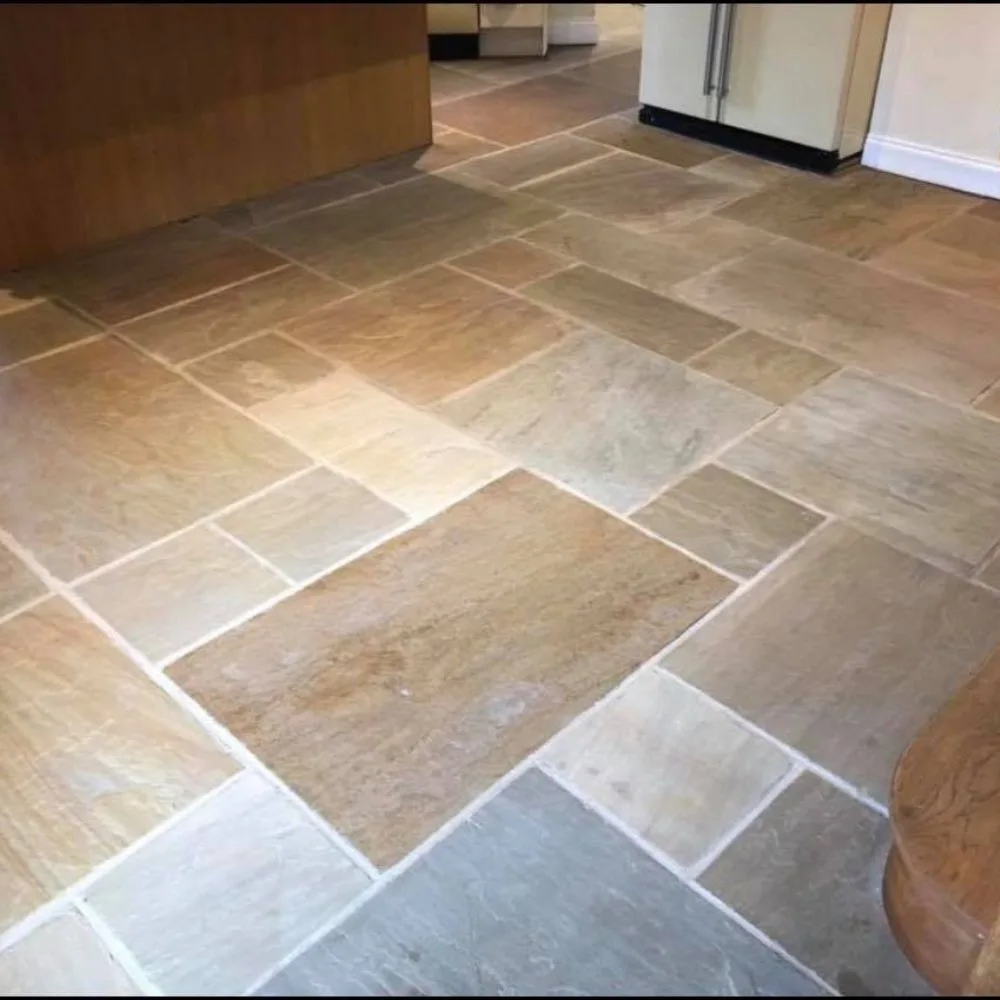
Sandstone — the Yorkshire stone and Indian stone you see on floors and patios across the region. Hard and durable, though not as hard as slate or granite, and very open-pored, so it drinks whatever is spilled on it.
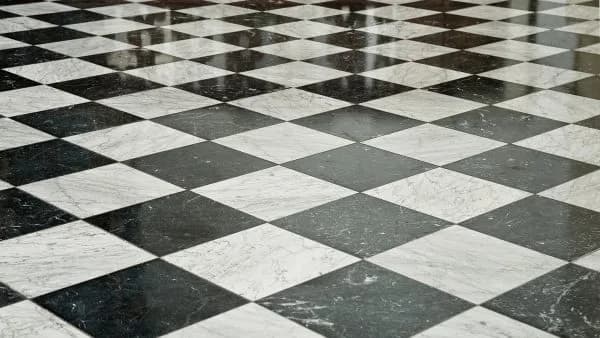
Granite is the tough one. Essentially scratchproof, one of the oldest and strongest flooring materials there is, and far less bothered by acid than the others. Even granite dulls under a detergent film, though.
The practical consequence: a product that is perfectly safe on granite can permanently damage travertine. "Stone floor cleaner" on a bottle does not mean your stone.
What we do instead
Every job starts the same way: a free, no-obligation visit from Rob, our fully trained floor technician. He carries out a demonstration on a small area so you can see the result on your own floor rather than somebody else's, surveys the floor properly to identify what it actually is, and talks through the finish you want. We will advise — but the decision on the finish is yours.
There are two systems, and which one suits depends on the floor and the building.
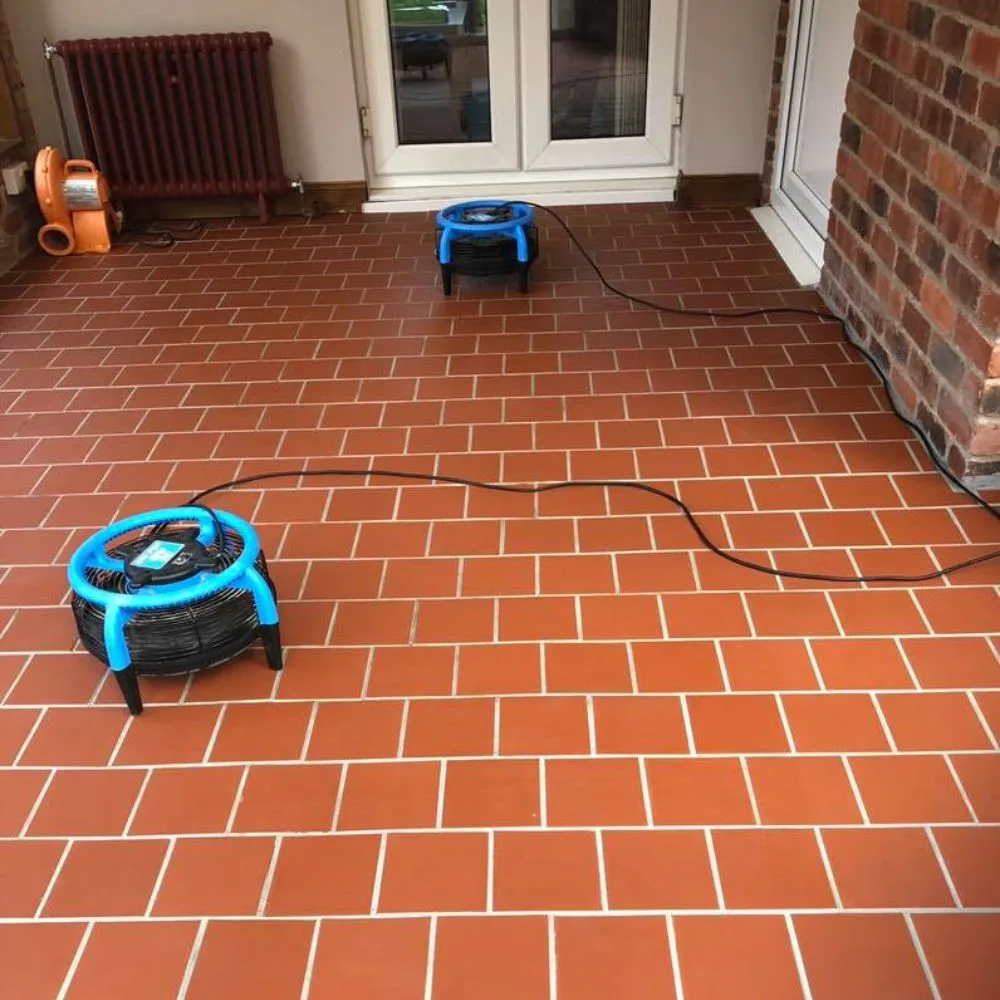
Steam with a counter-rotating brush. No chemicals at all. The heat and the mechanical action do the work, which makes it genuinely environmentally friendly and safe to use in places where chemicals are a problem — we use it in vets, schools and hospitals. It is fast, and it sanitises as it goes.
The conventional system. A pre-spray chosen for your specific stone, left to dwell so it loosens what is in the pores, then worked with a rotary scrubbing machine. Then — and this is the part a mop can never do — the slurry is rinsed away and removed rather than pushed around. That brown water coming off the floor is the entire point of the exercise.
We clean and restore floors in offices, restaurants, pubs, nursing homes, dog groomers, shops, communal areas, doctors' surgeries, salons and showrooms, as well as houses. The method is the same; the scheduling is not.
Sealing, and why we measure first
Once the floor is clean it can be sealed, and the finish is your choice — we will advise on what suits the stone and the traffic.
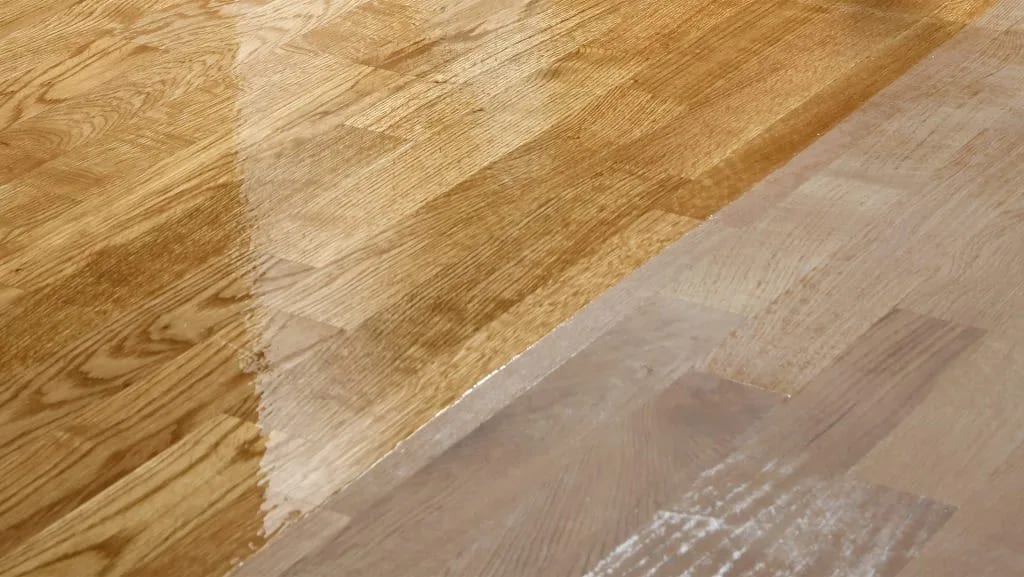
Before anything is applied, we use moisture detection meters to check the floor is genuinely dry enough. This is not box-ticking. Seal a floor with moisture still in the stone and you trap it there, and the result is a cloudy, milky finish that has to be stripped back off.
Once a seal is on, the floor can be walked on as normal after roughly two hours.
A sealer is not armour. What it does is slow down how fast a spill soaks in, and that is the whole difference between a spill you wipe up and one that is now part of the floor.
Keeping it
- Stop using anything acidic. If the label mentions limescale, descaler, vinegar or citrus, keep it away from travertine, limestone and sandstone.
- Use less product, not more. Nearly every residue problem we see started as a generous pour.
- Change the water between rooms. Washing the hall in the kitchen's water relocates the kitchen.
- Mats at the doors. Grit off a Yorkshire path is an abrasive, and abrasion is what actually wears stone out.
- Deal with spills quickly, wine and fruit juice above all.
We also offer regular maintenance packages, tailored to the floor and the building, which is usually the cheaper answer for a pub or a surgery than letting it go and restoring it every few years.
Where to go next
- Stone floor cleaning — the full service, and the stone types we work with
- Hard floor restoration — where a floor needs repair as well as cleaning
- Restoring the beauty of Yorkshire stone floors — the regional stone in more detail
Book a survey
Floor Angels is a family-run firm, part of Cleaning Angels Yorkshire, and has been restoring floors across South and West Yorkshire since 2007 — Sheffield, Barnsley, Huddersfield, Holmfirth and the villages between them.
Call 0114 288 1937 or 07729 345 458, or send us a message, and we will come out, look at the floor and tell you honestly what can be done with it.