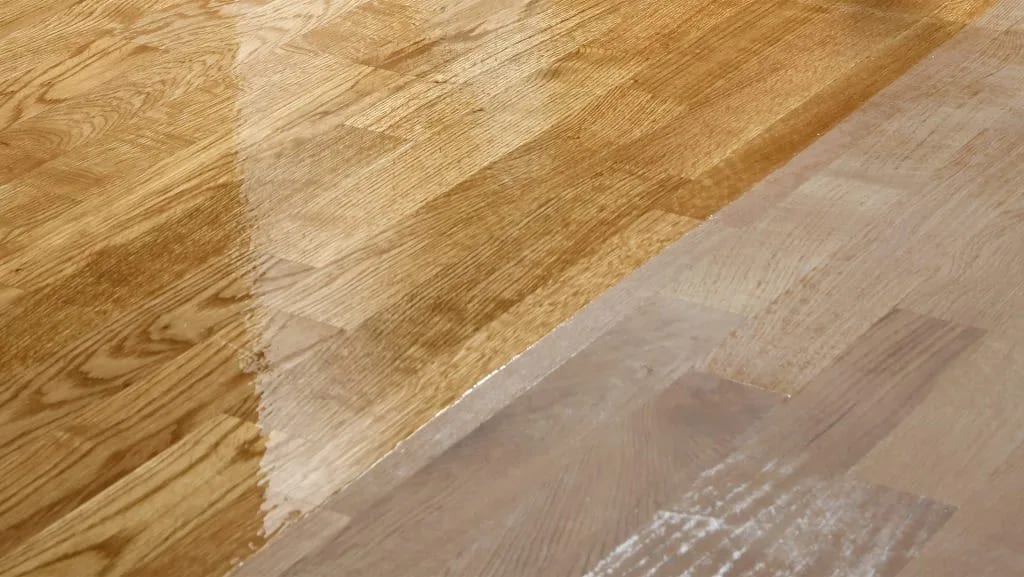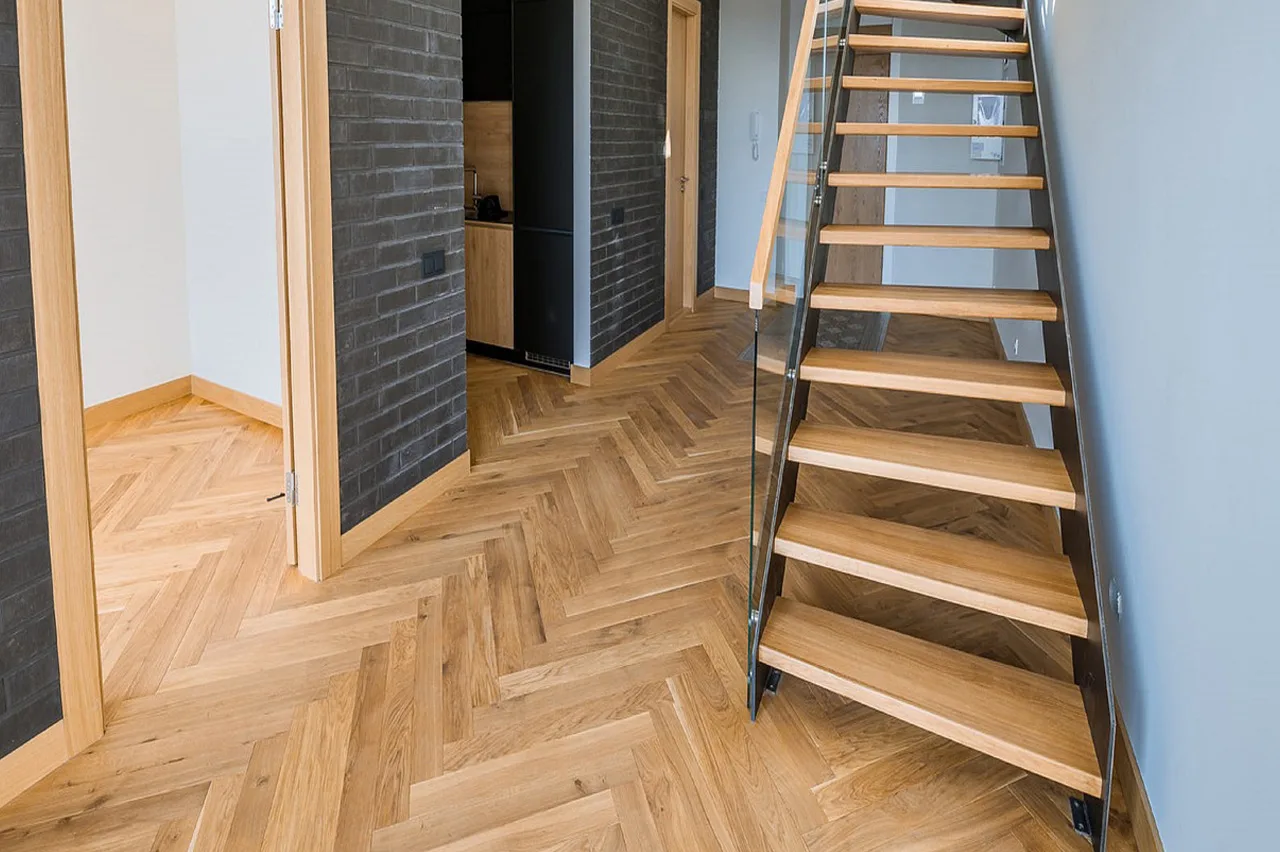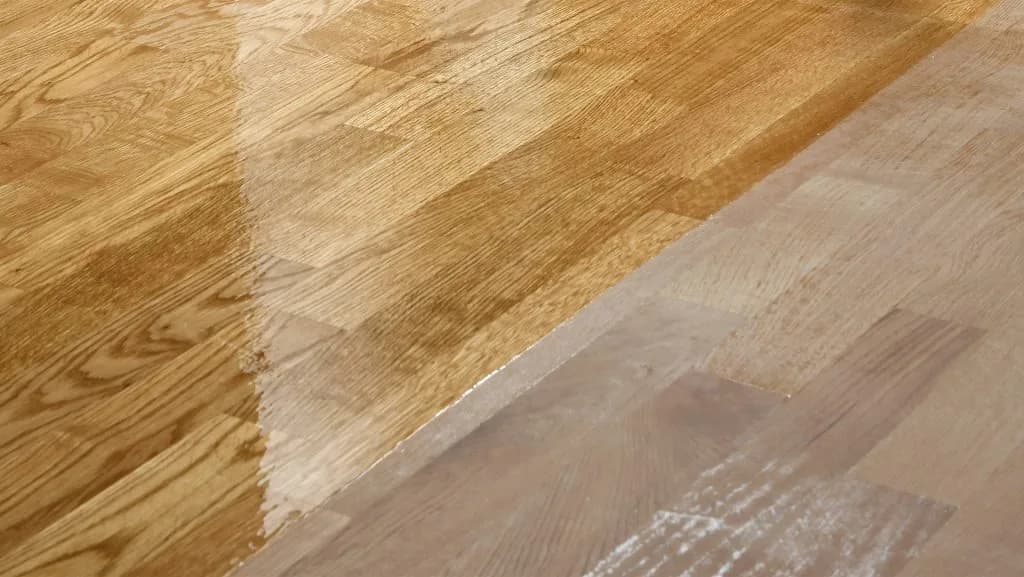
Short answer: usually yes. The longer answer is the one that matters, because an engineered floor has a finite amount of wood available to sand, and once it is gone there is no putting it back.
This comes up constantly across Sheffield, Barnsley and Huddersfield, where a lot of the housing stock fitted out in the last twenty years went down in engineered oak rather than solid. People are told by somebody that engineered floors "can't be sanded", live with a tired floor for years, and then find out it could have been brought back twice over.
What engineered wood actually is
An engineered board is a sandwich. A real hardwood top layer — the wear layer, sometimes called the lamella — bonded to a plywood or softwood core beneath it.
The core is what makes the board stable. It is why engineered floors cope with underfloor heating and with kitchens and conservatories where solid boards would move. But it is not what you see, and it is not what can be sanded. Only the top layer is.
So the question is never really "can it be sanded". It is how thick is the wear layer.
How many sandings you get
A full sand removes something in the region of a millimetre, sometimes a little less with modern equipment and a light touch. You also need to leave material behind — sanding down to the glue line ruins the board.
| Wear layer | Realistically |
|---|---|
| 2mm or less | Usually a light refresh at best. A full sand risks going through |
| 3mm | One full sand, carefully |
| 4mm | Two full sands |
| 5–6mm | Two or three, which is most of a lifetime |
A good quality engineered oak board with a 6mm wear layer will outlive a cheap solid floor, because the solid one moves and the engineered one does not.
Working out what you have
If you never saw it fitted, there are a few ways to find out before anyone starts.
- Look at a cut edge. A threshold strip, a vent cut-out, or the gap at the edge of the room under the skirting or beading. The layers are usually visible with a torch, and the top layer is a different grain direction from the ply beneath it.
- Find a spare board. People often leave a few in a loft or a garage after a fit.
- Check what the floor has already had. A board sanded once has already spent part of its budget, and it is not always obvious.
- Ask us to look. This is the first thing Rob checks on a survey, and it decides everything that follows.
Every job starts the same way: a free, no-obligation visit from Rob, our fully trained floor technician. He carries out a demonstration on a small area so you can see the result on your own floor rather than somebody else's, surveys the floor properly to identify what it actually is, and talks through the finish you want. We will advise — but the decision on the finish is yours.
What gives it away before you ask
A few signs that a floor is nearer the end of its sanding life than the start:
- The colour varying board to board in a way it did not used to, particularly a paler, pinker look in the traffic lanes
- Bevelled edges that have gone shallow or disappeared
- The grain feeling slightly raised or rough underfoot where the lacquer has worn through
- Click-fit boards starting to lift at the joints — a sign the tongue is thinning
None of those mean the floor is finished. They mean it should be looked at before another winter of grit gets ground into it.
Where engineered floors go wrong
Going through the wear layer. Irreversible. A patch of exposed ply in the middle of a room means replacing boards, and matching twenty-year-old oak to anything currently sold is close to impossible.
Edges and doorways. The wear layer is thinnest where the board was machined, and the big machine cannot reach the perimeter. Edging work on engineered boards is where the damage usually happens, and it is handwork, not horsepower.
Starting too coarse. On a 3mm layer the choice of first grit is the whole job. Too aggressive and you have spent half the budget on the first pass.
Hiring a machine. A hire sander has no way of telling you how much wood is left, and the floors we are called to rescue are rarely the ones that were left alone. There is more on that in why DIY isn't worth it on an original wood floor.
The dust question
Sanding used to mean sheeting the house and living with fine dust for a fortnight afterwards. It does not any more. Our sanding is dust-free — the machines extract at the cutting head rather than blowing it round the room — which matters more on engineered floors than people expect, because fine grit trapped under the machine is exactly what puts swirl marks into a thin wear layer.
Finishing
Once it is flat, the finish is yours to choose. Hardwax oil keeps the grain open and is repairable in patches, which suits a floor that will take knocks. Lacquer is harder wearing underfoot but a scratch means recoating the area rather than spot-fixing it. Stain is possible on engineered oak exactly as on solid — there is a step-by-step of that in staining a newly sanded wood floor.
And if it genuinely cannot be sanded
Sometimes the honest answer is no. A 2mm wear layer that has already been sanded once has nothing left to give, and we will say so rather than take the job.
Even then there are usually options short of a full replacement — a deep clean and recoat will lift a tired lacquer without removing any wood at all, and it costs a fraction of a full sand.
Where to go next
- Wood sanding and finishing — the full service, solid and engineered
- Floor sanding across Yorkshire — areas, and how the process runs
- Town pages for Huddersfield, Sheffield, Barnsley and Holmfirth
Book a survey
Floor Angels is a family-run firm, part of Cleaning Angels Yorkshire, and has been restoring floors across South and West Yorkshire since 2007 — Sheffield, Barnsley, Huddersfield, Holmfirth and the villages between them.
Call 0114 288 1937 or 07729 345 458, or send us a message, and we will come out, look at the floor and tell you honestly what can be done with it.